What Is Teeth Whitening?
Teeth whitening is one of the most commonly preferred cosmetic dental treatments for patients who want a brighter, cleaner and more refreshed smile. Over time, teeth may become darker, yellowed or stained due to daily habits, ageing, diet, smoking, previous dental treatments or changes in the internal structure of the tooth. The purpose of professional teeth whitening is not to create an artificial or excessively white appearance. The aim is to achieve a brighter shade that is natural, healthy-looking and harmonious with the patient’s facial features, tooth structure and smile line. For this reason, teeth whitening should always be planned individually. Before treatment, the dentist evaluates the condition of the enamel, the cause of discolouration, existing fillings or crowns, gum health, tooth sensitivity and the patient’s expectations. This clinical assessment is essential because not every type of discolouration responds to the same whitening method. In some patients, the main problem is surface staining caused by tea, coffee, smoking or coloured foods. In others, the discolouration may be deeper and related to ageing, trauma, root canal treatment or changes within the tooth structure. Understanding the cause of the colour change is the key to choosing the safest and most effective treatment option. If there is plaque, tartar, gum inflammation, tooth decay, old leaking fillings or surface deposits, these should be treated before whitening. In many cases, professional dental cleaning may be recommended first. A clean and healthy tooth surface allows the whitening result to be assessed more accurately and helps improve the overall outcome. Teeth whitening can be an excellent option for patients who have visible staining due to tea, coffee, tobacco or age-related colour changes. However, not every yellow or dark tooth requires whitening. Sometimes the problem may be caused by enamel wear, old restorations, decay, trauma or a need for another dental treatment. Therefore, the final decision should always be made after a clinical examination. With the correct patient selection and method, professional teeth whitening can provide a brighter, fresher and more balanced smile while preserving the natural character of the teeth.
Why Do Teeth Become Discoloured?
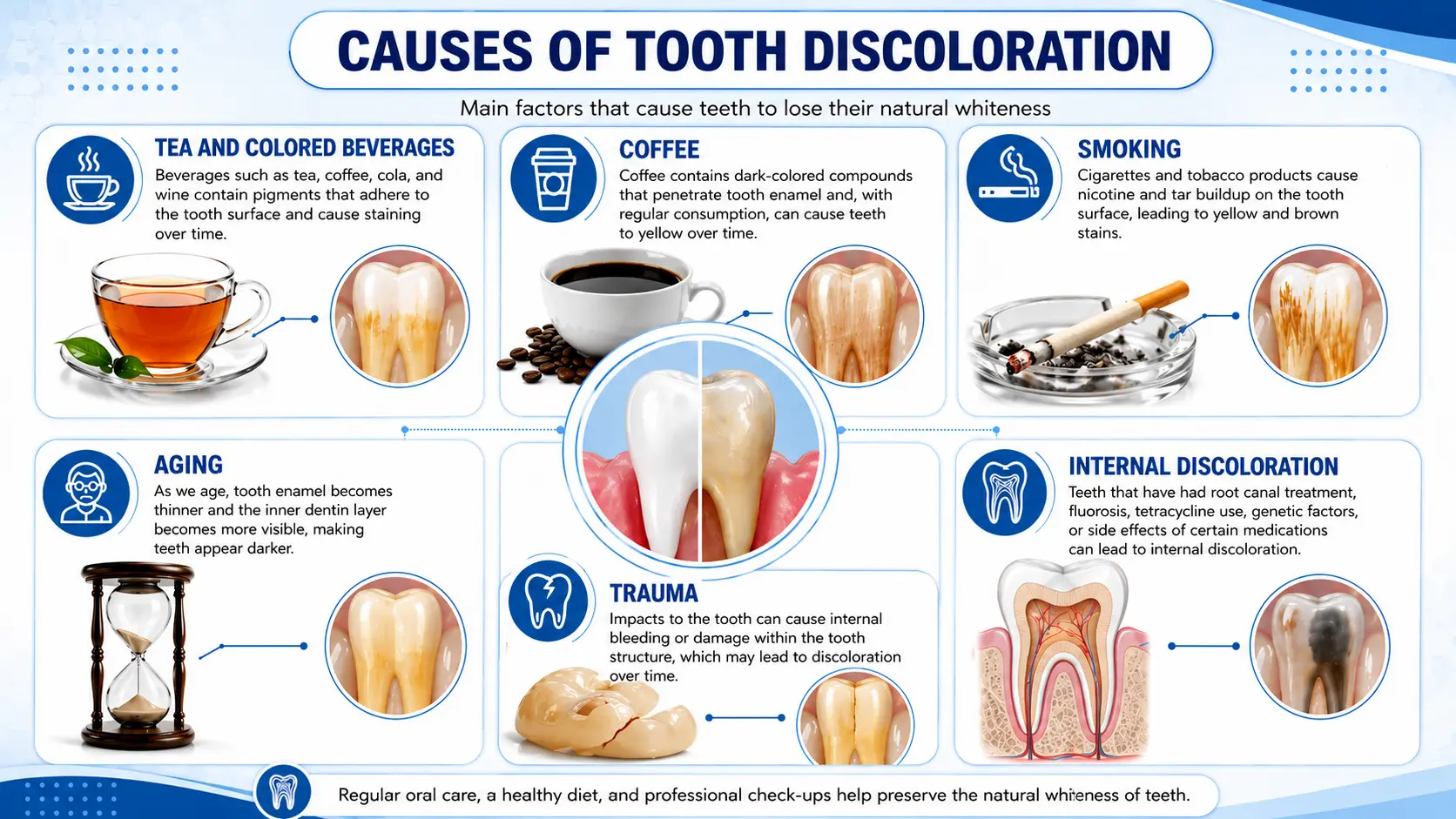
Tooth discolouration can generally be divided into two main categories: external staining and internal discolouration. External staining develops on the outer surface of the teeth. It is usually associated with daily habits such as drinking tea, coffee, red wine, coloured beverages, smoking or consuming highly pigmented foods. These stains may begin mildly, but they can become more noticeable over time if oral hygiene and professional cleaning are neglected. Internal discolouration occurs when the colour change develops within the tooth structure itself. This may be related to ageing, trauma, previous root canal treatment, enamel changes, medication history or developmental factors. In such cases, simple surface cleaning may not be enough to improve the colour. Sometimes discolouration affects only one tooth. A single dark tooth should always be evaluated carefully, as it may indicate previous trauma, nerve changes or an old dental treatment. In these cases, standard whitening of all teeth may not be the most appropriate solution. A specific single-tooth whitening approach or another restorative treatment may be required. Existing restorations are also important during the assessment. Fillings, crowns, veneers and bridges do not respond to whitening in the same way as natural teeth. If these restorations are visible in the smile line, the dentist must evaluate whether they will still match the surrounding teeth after whitening. Oral hygiene also plays an important role in tooth colour. Inadequate brushing, poor interdental cleaning and delayed dental visits can make staining more visible. For this reason, tooth discolouration should not be assessed only as a cosmetic concern. It should be evaluated together with the overall health of the teeth and gums.
How Does Teeth Whitening Work?
Professional teeth whitening works by reducing the intensity of colour molecules that have accumulated on or within the tooth structure. Whitening agents are applied to the teeth in a controlled way, helping to break down the molecules responsible for discolouration. As a result, the teeth can appear cleaner, brighter and more even in colour. The way teeth respond to whitening depends on the type and depth of the discolouration. Surface stains caused by tea, coffee or smoking may respond differently from deeper colour changes caused by ageing, trauma or previous dental treatment. Not every patient achieves the same level of whitening. Patients with healthy enamel, good oral hygiene and mainly surface-based stains often experience more predictable results. Patients with deep discolouration, enamel wear, tooth sensitivity or multiple front-tooth restorations may require a more carefully planned approach. The aim is not to create an unnaturally white appearance, but to achieve a shade that looks healthy, balanced and suitable for the patient’s natural smile. Some patients may experience temporary sensitivity during or after whitening. This is usually short-lived and can be managed with the correct treatment plan. To reduce the risk of sensitivity, the dentist carefully considers the whitening method, application time, product concentration and the current condition of the teeth. If there are cavities, cracks, enamel defects, gum recession or active gum problems, these should be treated before whitening. This helps protect patient comfort and improves the predictability of the result.
Teeth Whitening Methods
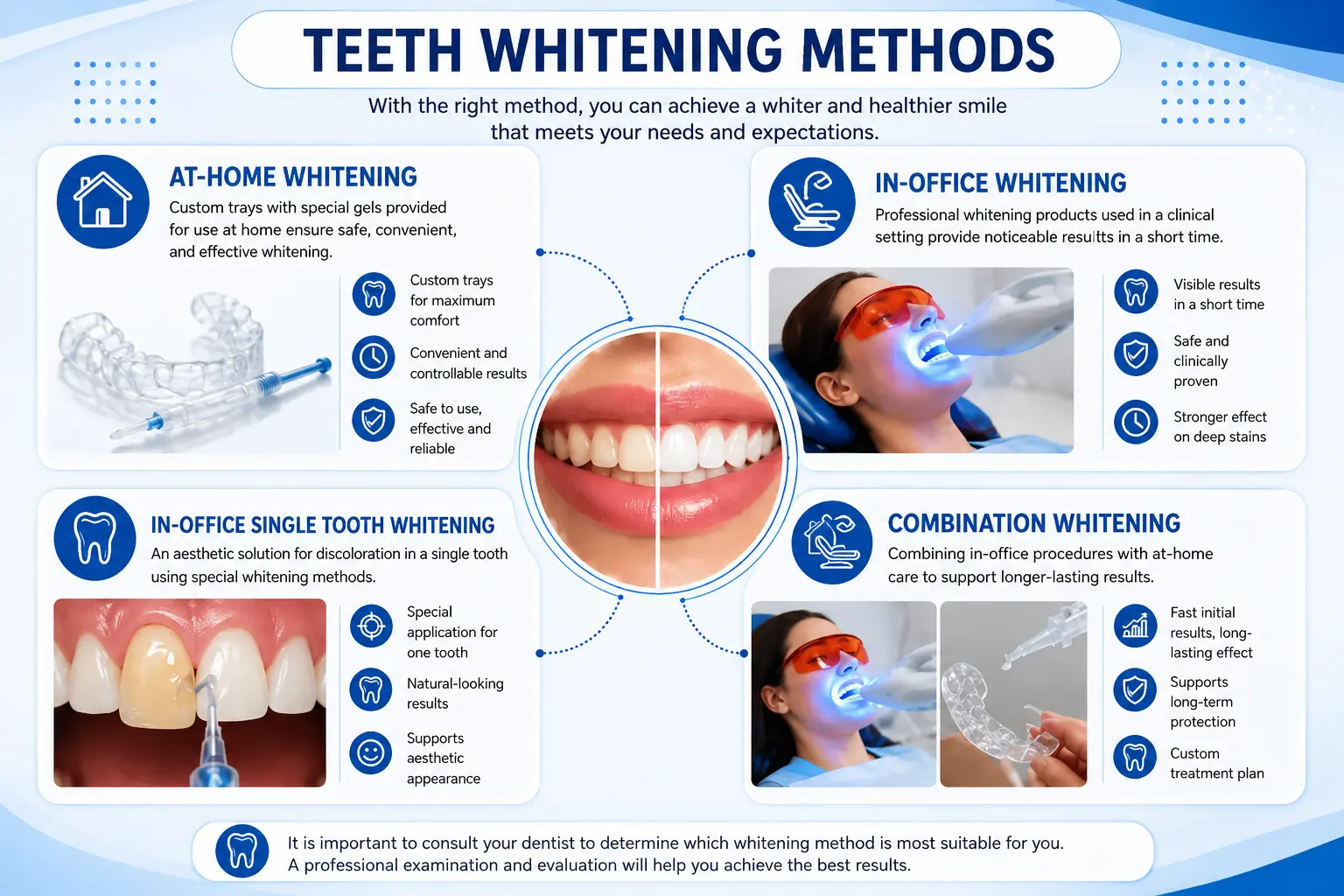
Teeth whitening methods vary according to the clinical situation, the type of discolouration and the patient’s needs. The main options include in-clinic whitening, home whitening, single-tooth whitening and combined whitening. The most suitable method is selected after evaluating the cause of staining, the condition of the teeth, existing restorations, sensitivity levels and the patient’s aesthetic expectations. Choosing the strongest whitening method is not always the right approach. The best treatment is the one that is clinically appropriate, safe and suitable for the patient’s natural tooth structure.
Home Teeth Whitening
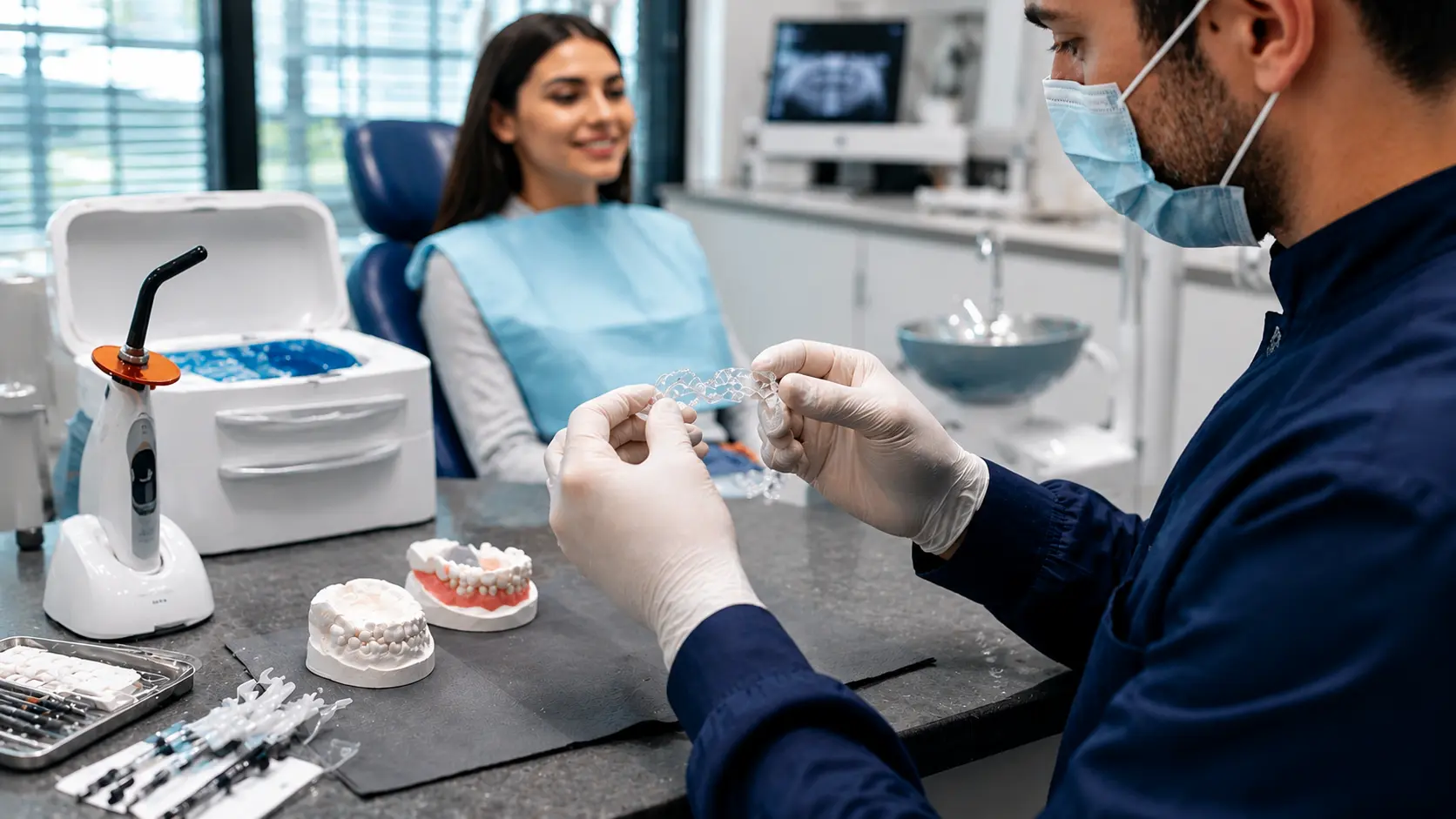
Home teeth whitening is a controlled whitening method planned by the dentist and carried out by the patient using custom-made whitening trays and professional whitening gel. The aim of home whitening is to lighten the tooth colour gradually and comfortably rather than creating an aggressive or sudden change. It is particularly suitable for patients who prefer a more gradual process and want to continue the treatment around their daily routine. However, the fact that the treatment is performed at home does not mean that it should be done with random over-the-counter products. Professional home whitening must be planned after a dental examination. Before starting treatment, the dentist checks for cavities, gum disease, enamel cracks, sensitivity, old restorations and tartar build-up. If necessary, professional cleaning or other dental treatments may be completed first. One of the main advantages of home whitening is that the process progresses gradually. This allows the dentist and patient to monitor the response of the teeth more comfortably. When used correctly, home whitening can provide a natural-looking and controlled improvement in tooth colour. The success of home whitening depends not only on the product used, but also on patient compliance. Using too much gel, wearing the trays for longer than recommended or ignoring oral hygiene instructions can increase the risk of sensitivity and gum irritation.
How Is Home Teeth Whitening Applied?
First, impressions or digital scans are taken so that custom whitening trays can be prepared. These trays are designed to fit the patient’s teeth accurately and hold the whitening gel in the correct position. The dentist explains how much gel should be placed into the tray, how long the tray should be worn and how the treatment should be continued at home. Only a small amount of whitening gel is needed. Using more gel does not make the teeth whiten faster. Instead, excess gel may overflow from the tray, contact the gums and cause irritation or sensitivity. The whitening tray must fit properly. A poorly fitting tray may reduce comfort and allow the gel to spread to areas where it should not be applied.
How Long Does Home Teeth Whitening Take?
The duration of home whitening varies depending on the degree of discolouration, the patient’s tooth structure, the whitening system used and how well the patient follows the instructions. Some patients notice a difference within the first few days, while others require a longer and more gradual process. Mild surface staining may improve more quickly, whereas deeper colour changes may need more time. The process should not be rushed. Controlled whitening usually provides a more natural result and better patient comfort. Wearing the trays for longer than advised does not guarantee a better outcome and may increase sensitivity.
How Much Gel Should Be Placed in the Whitening Tray?
Only a small, controlled amount of gel should be placed into the tray. The purpose is to create a thin layer of contact between the whitening gel and the tooth surface. More gel does not mean better or faster whitening. If gel frequently overflows from the tray after placement, too much product is being used. This can irritate the gums and increase sensitivity. The dentist will show the patient exactly where and how much gel to apply.
Should the Whitening Tray Be Cleaned?
Yes. Whitening trays should be cleaned after each use. If gel residue remains inside the tray, it can affect hygiene and make future applications less comfortable. After use, the tray should be rinsed gently with cool or lukewarm water. Very hot water should not be used because it may distort the shape of the tray. The tray should also be stored clean and dry in its protective case. Proper tray care helps maintain hygiene and supports a more comfortable whitening process.
Single-Tooth Whitening
Single-tooth whitening is a specialised treatment used when only one tooth appears darker than the surrounding teeth. This is commonly seen in teeth that have experienced trauma, lost vitality or undergone root canal treatment. When all the surrounding teeth are a similar shade but one tooth appears noticeably darker, the aesthetic imbalance can be very visible. In these cases, general whitening may not solve the problem, as the cause of the discolouration is often inside the tooth. Single-tooth whitening requires careful assessment. The dentist evaluates the tooth’s history, root canal status, surrounding gum health, colour difference and long-term aesthetic expectations. The goal is not simply to make the dark tooth as white as possible, but to bring it into harmony with the neighbouring teeth. If the discolouration is severe or the tooth has structural damage, additional restorative options may also be discussed.
Combined Teeth Whitening
Combined teeth whitening involves both in-clinic whitening and home whitening as part of the same treatment plan. The aim is to achieve an initial whitening effect in the clinic and then support the result at home with custom trays and controlled gel use. This approach may be suitable for patients with more noticeable discolouration or those who want both visible improvement and controlled maintenance. The advantage of combined whitening is that it brings together the strengths of both methods. The in-clinic stage can provide a faster initial change, while the home stage helps stabilise and support the final result. However, combined whitening is not necessary for every patient. It is recommended only when it is clinically appropriate and beneficial for the patient’s expectations and tooth condition.
In-Clinic Teeth Whitening
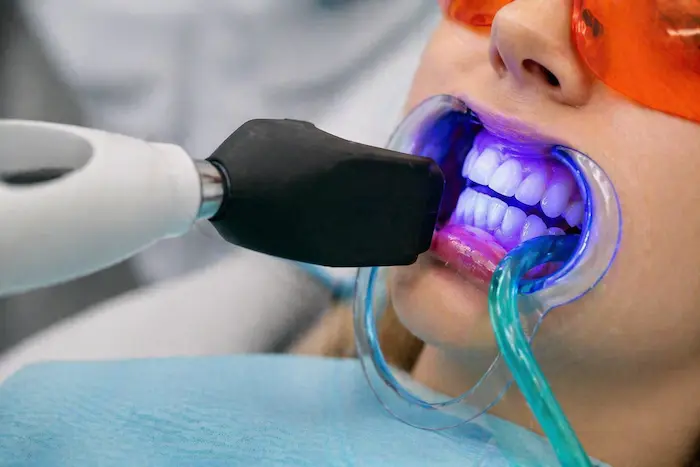
In-clinic teeth whitening is a professional whitening procedure performed under the supervision of a dentist. It is also commonly known as office whitening or power bleaching. During the procedure, the gums and surrounding soft tissues are carefully protected before the whitening agent is applied to the teeth. The dentist controls the amount of product used, the application time and the overall safety of the procedure. This method is often preferred by patients who want to see a visible improvement in a shorter period of time. However, suitability depends on the condition of the teeth, the cause of staining and the patient’s sensitivity history. The main advantage of in-clinic whitening is professional control. Compared with non-professional products used at home, the treatment is more predictable and safer when performed correctly. After in-clinic whitening, the longevity of the result depends on oral hygiene, dietary habits, smoking and regular dental care.
Laser Teeth Whitening
Laser teeth whitening is a commonly used term among patients, although different clinics may use this phrase to describe different activation systems. In some professional whitening treatments, the whitening gel may be supported by a special light or activation device. The important point is not the name of the device, but whether the method is suitable for the patient. Many patients ask about laser whitening because they expect fast results. In some cases, professional light-assisted whitening can provide a visible improvement in a short time. However, not every patient will achieve the same result. The outcome depends on the type of staining, enamel structure, sensitivity level, gum health and existing restorations. For this reason, laser whitening should not be seen as a guaranteed way to achieve extremely white teeth. A clinical examination is necessary to determine whether this method is suitable.
Zoom Whitening
Zoom whitening is one of the well-known professional whitening systems used in clinical dentistry. Patients often associate this name with fast, in-office whitening results. However, the brand or system name is not the most important factor. What matters is whether the patient is suitable for this type of professional whitening. Zoom-type whitening treatments are usually planned in a clinical setting and performed under dental supervision. They may be suitable for patients who want a noticeable improvement in a relatively short time. Before treatment, the dentist evaluates the current tooth shade, sensitivity level, enamel condition and whether there are visible fillings, crowns or veneers in the smile line. This is important because whitening affects natural teeth, but it does not change the colour of existing restorations. The most appropriate whitening option should always be chosen according to the patient’s tooth structure, expectations and clinical safety.
Is Zirconia Crown Treatment a Teeth Whitening Method?
Zirconia crowns are sometimes confused with teeth whitening, but they are not the same treatment. Teeth whitening is a procedure that lightens the colour of natural tooth tissue. Zirconia crowns, on the other hand, are restorative treatments placed over teeth for aesthetic and functional reasons. In some patients, the issue is not only tooth colour. There may also be shape problems, fractures, worn teeth, old fillings, structural damage or severe colour mismatch. In such cases, whitening alone may not provide the desired result, and restorative options such as zirconia crowns may be considered. However, zirconia should not be seen as a stronger form of whitening. It is a different treatment with a different purpose. If natural teeth can be improved with conservative whitening, this is usually preferred before considering more invasive restorative procedures. Crowns are considered when there is a clear clinical or aesthetic need.
Which Teeth Whitening Method Is Suitable for You?
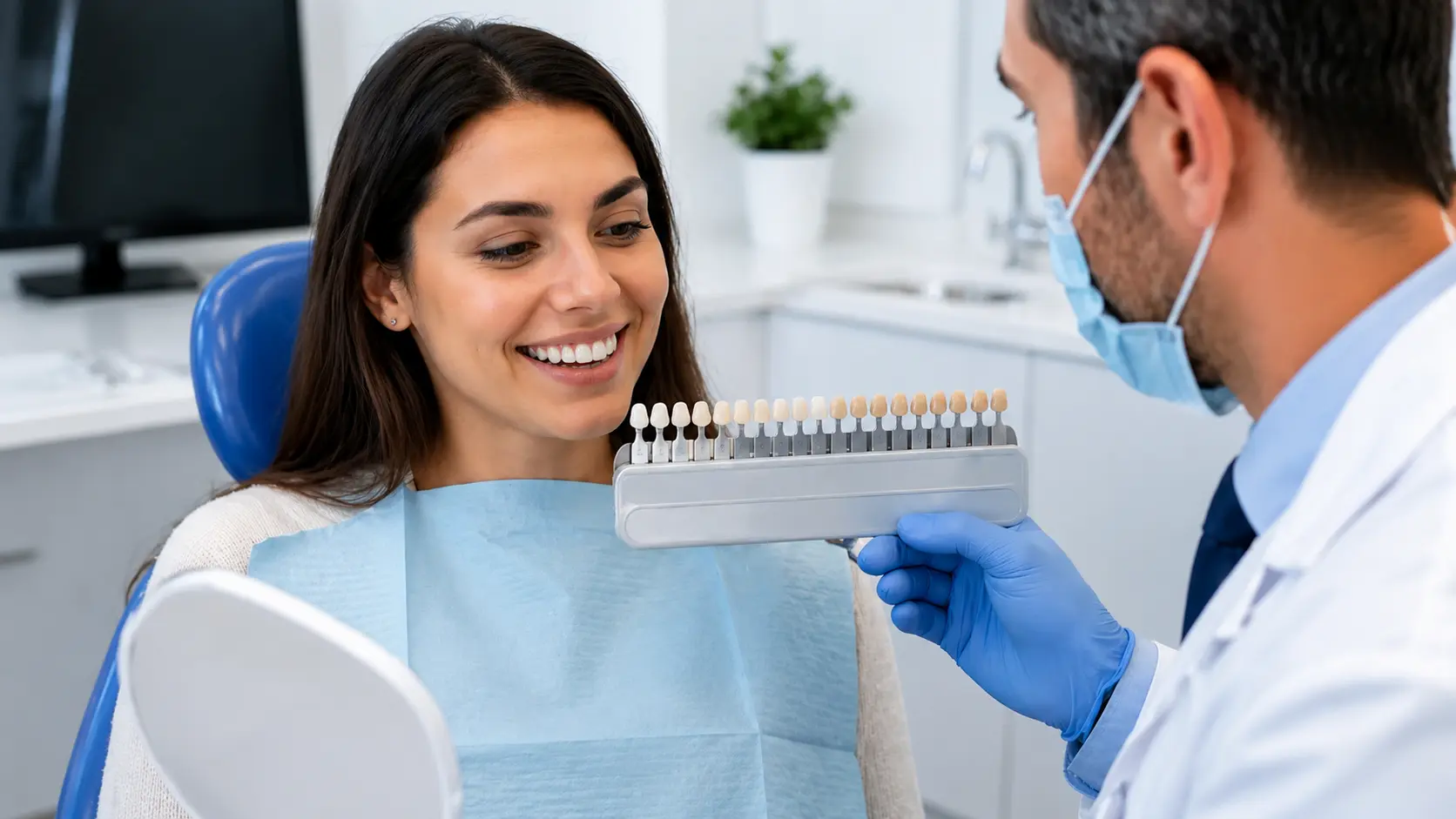
The most suitable whitening method depends on several factors, including the cause of discolouration, tooth structure, gum health, sensitivity level, existing fillings or crowns, and the patient’s expectations. Patients with mainly surface stains may need a different approach from patients with deep internal discolouration. Some patients may benefit from home whitening, while others may be better suited to in-clinic whitening. If only one tooth is dark, single-tooth whitening may be more appropriate. Combined whitening may be recommended when both a faster initial result and controlled continuation are desired. The most powerful method is not always the best method. An unsuitable whitening approach may cause unnecessary sensitivity, an unnatural appearance or disappointing results. The best option is always the one planned specifically for the patient after a professional dental assessment.
Is Teeth Whitening Permanent?
Teeth whitening is not considered completely permanent. The result can last for a long time, but its durability depends on the patient’s oral hygiene, diet, smoking habits, consumption of tea or coffee, and natural tooth structure. Some patients maintain their brighter shade for a long period, while others may notice gradual darkening over time. This does not mean the treatment has failed. It is a natural result of continued exposure to staining factors. Smoking, frequent coffee or tea consumption, coloured beverages and poor oral hygiene can cause staining to return more quickly. Regular brushing, interdental cleaning and professional dental check-ups help preserve the result. In some patients, maintenance whitening may be recommended after a certain period, depending on the clinical situation.
What Should You Avoid After Teeth Whitening?
The period after whitening is important for protecting the result. In the first days after treatment, patients should be careful with foods and drinks that can stain the teeth.
Tea, coffee, red wine, dark sauces, coloured drinks and smoking may affect the newly whitened appearance more quickly. For this reason, extra care is recommended during the early post-treatment period.
Oral hygiene should also be maintained carefully. Brushing twice a day, cleaning between the teeth and attending routine dental check-ups help keep the teeth cleaner and brighter for longer.
If sensitivity occurs, very hot or very cold foods and drinks should be avoided for a short period. Sensitivity is usually temporary, but if it continues, the dentist should be informed.
Patients should also avoid uncontrolled use of abrasive products or repeated whitening products without professional guidance. Maintaining a natural and balanced result is best achieved through simple, consistent and safe oral care.
Are There Any Risks or Side Effects of Teeth Whitening?
When performed after proper clinical assessment and with the correct method, teeth whitening is generally considered safe. However, temporary side effects can occur. The most common side effect is tooth sensitivity. Some patients may experience short-term sensitivity to hot or cold foods and drinks after treatment. This usually improves within a short time and can be managed with appropriate care. Gum irritation may also occur if whitening gel comes into contact with the soft tissues. This is why professional planning and correct application are important. Uncontrolled whitening is the main cause of problems. Using unsuitable products, applying too much gel, exceeding the recommended time or whitening teeth with untreated cavities or gum problems can lead to discomfort and unsatisfactory results. Teeth whitening should not be treated as a simple cosmetic product. It is a dental procedure that should be planned according to the patient’s oral health.
Teeth Whitening Prices in 2026
The cost of teeth whitening can vary depending on the method used, the type of discolouration, the number of sessions required, whether home trays are prepared, and whether additional treatments such as professional cleaning are needed beforehand. Because each patient’s dental condition and expectations are different, giving a fixed price without examination may be misleading. A clear treatment plan and accurate fee information can be provided after a clinical assessment. Teeth whitening treatments are available in our clinic for suitable patients following professional evaluation.
Frequently Asked Questions
Can everyone have teeth whitening?
No. Teeth whitening is not suitable for every patient in the same way. Patients with cavities, gum disease, severe sensitivity, enamel damage or visible restorations should be carefully evaluated before treatment.
Does teeth whitening hurt?
Severe pain is not usually expected during professional whitening. However, some patients may experience temporary sensitivity. This is usually short-lived and can be managed with the right treatment plan.
Is home whitening or in-clinic whitening better?
There is no single answer. The best method depends on the cause of discolouration, the patient’s sensitivity level, expectations and oral health. Some patients are better suited to home whitening, while others may benefit more from in-clinic whitening.
Is general whitening enough for a single dark tooth?
Not always. A single dark tooth often requires a separate assessment. In some cases, single-tooth whitening or another restorative treatment may be needed.
Can teeth become yellow again after whitening?
Yes. Teeth may gradually stain again over time, especially with smoking, coffee, tea, coloured foods and poor oral hygiene. Regular care helps maintain the result for longer.
Does whitening change the colour of fillings, crowns or veneers?
No. Whitening affects natural tooth tissue, but it does not change the colour of fillings, crowns, veneers or other restorative materials. Existing restorations should be evaluated before treatment.