What Are Porcelain Veneers?
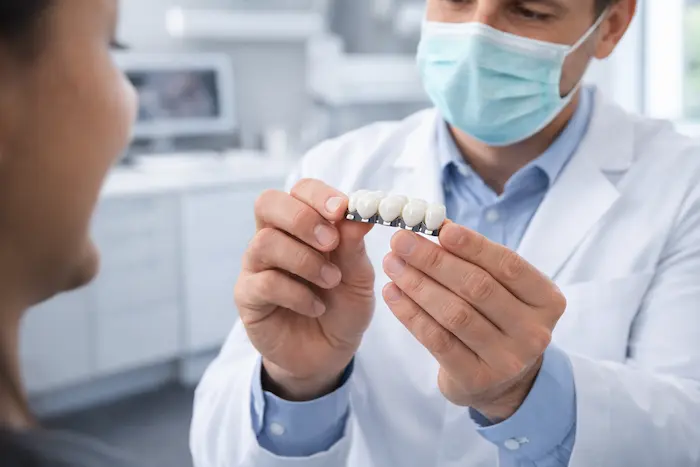
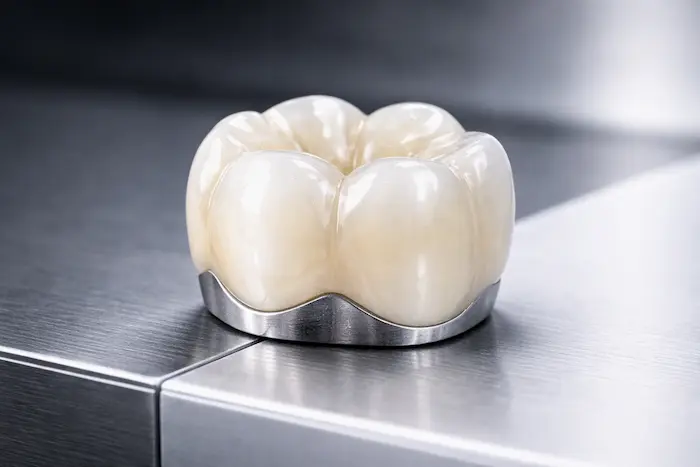
When patients hear the word “porcelain”, they often imagine a fragile material similar to glass or a plate used in everyday life. However, the medical-grade porcelain used in dentistry is produced in specialised laboratory settings and fired at high temperatures. It is a translucent material that can aesthetically mimic the appearance of natural tooth enamel. However, porcelain in its pure form is not strong enough to withstand the significant biting forces generated by the jaw. Although it provides excellent aesthetics, when used alone it can behave like fragile glass. At this point, the substructure that provides the true strength of the restoration becomes essential. A dental crown can be compared to a building. The outer façade represents the porcelain layer, which provides the aesthetic appearance. However, the structure that allows the building to remain stable and resistant to pressure is its internal framework. In porcelain restorations, this supportive framework is provided by special medical-grade metal alloys placed beneath the porcelain. This system is known in dentistry as a metal-supported porcelain restoration. While only the white, natural-looking tooth-coloured surface is visible from the outside, a strong metal framework inside supports the restoration and significantly increases its durability.
Why Is This Treatment Performed? Extensive Tooth Structure Loss and Fractures
The primary purpose of a dental crown is to protect teeth that are too damaged to be restored reliably with a filling. When a tooth has been extensively weakened by deep decay or when a large portion has fractured due to trauma, simply placing filling material over the area is not a suitable long-term clinical solution.
Very large fillings can crack under chewing forces, or they may cause the remaining healthy tooth structure to fracture as well, potentially leading to complete tooth loss and the need for extraction. In such cases, the affected tooth is carefully reduced and a porcelain crown is placed over it, much like a protective helmet. This allows the tooth to be protected from external forces in all directions.
Protecting Teeth After Root Canal Treatment
Another common reason for this treatment is to protect teeth that have undergone root canal treatment. During root canal treatment, the nerves and blood vessels inside the tooth are removed. Although this procedure eliminates pain and infection, the tooth may lose some of its natural vitality and flexibility over time.
As a result, root canal-treated teeth can become more brittle and more prone to fracture, particularly when biting on hard foods. To prevent this, placing a strong crown over a root canal-treated molar is a standard protective dental procedure that helps preserve the tooth and maintain its function for many years.
Replacing Missing Teeth with Dental Bridges and Restoring Chewing Function
When one or more teeth are lost, the resulting gaps should be restored not only for aesthetic reasons but also to maintain proper chewing function, which is the first stage of digestion. In cases where dental implants are not possible or the patient does not prefer implant treatment, a dental bridge can be made by using the healthy teeth on either side of the gap as supporting teeth.
This is particularly important in the back of the mouth, where the molars are exposed to significant chewing forces. The artificial tooth replacing the missing tooth, as well as the supporting teeth that hold it in place, must be strong enough to withstand these forces. Metal-supported porcelain restorations provide high resistance to bending and fracture, making them a reliable option for posterior bridge restorations. They allow patients to chew firmer foods, such as meat and nuts, with confidence and comfort.
What Are the Advantages and Disadvantages of Porcelain Crowns?
Every dental treatment has its own advantages and disadvantages, depending on the patient’s anatomy, the area being treated, and the expected outcome. Traditional metal-supported porcelain crowns have been used worldwide for many years and remain one of the most established restorative treatment options. When choosing this type of treatment, it is important to consider not only how the restoration will look, but also how well it will perform mechanically inside the mouth. Understanding the advantages and limitations of porcelain crowns helps patients develop realistic expectations and make informed treatment decisions.
Main Advantages of Porcelain Crowns: Longevity and Success Rate
The main reason this treatment is still widely used in dentistry is its clinically proven durability and long-term reliability. The internal metal framework significantly increases the crown’s resistance to bending and fracture. When planned correctly and supported by good daily oral hygiene, these crowns can remain functional and stable in the mouth for many years without losing their shape, wearing down excessively, or developing decay on the restoration itself. Another important advantage is the balance between cost and accessibility. Compared with newer-generation aesthetic materials, traditional porcelain restorations can often be provided at a more accessible cost. This makes them a practical and reliable treatment option, especially for large-span bridge restorations where multiple teeth are missing. In such cases, they offer patients a solution that is both economically reasonable and functionally dependable for chewing.
Chewing Strength in the Back Teeth: Mechanical Durability
The human jaw produces very high chewing forces, especially around the molars at the back of the mouth. These forces, often applied without us even noticing, can place significant mechanical stress on the restorative material. The metal framework used in porcelain crowns is designed to absorb these forces and distribute them evenly across the tooth.
In the back teeth, function is often more important than aesthetics. The main role of these teeth is to break down and grind food effectively. Metal-supported porcelain crowns are highly resistant to the heavy forces placed on them and are much less likely to bend or fracture under pressure.
This allows patients to chew firm foods, such as nuts or tougher meats, with confidence and comfort. By helping food to be properly broken down in the mouth, these restorations also support the first stage of digestion and contribute to overall digestive function.
Disadvantages of the Procedure: Risk of Gum Discolouration
As with any dental procedure, metal-supported restorations also have certain anatomical limitations. One of the main aesthetic concerns for patients is the possibility of gum discolouration or a dark line near the gum margin. This is not a sign of disease or decay; it is usually a visual effect caused by the underlying metal framework.
Over time, the gums may recede slightly due to ageing, brushing habits, or physiological factors. If a tooth has a porcelain crown and the gum margin moves slightly, the fine junction between the crown and the gum may become visible. Because there is a grey metal framework beneath the porcelain, this area can sometimes appear as a dark shadow along the gum line.
This is particularly important for front teeth that are visible when smiling, as the grey reflection may negatively affect the overall aesthetic appearance.
Light Translucency and Aesthetic Limitations in the Front Teeth
The second main disadvantage is related to light translucency. Natural, healthy tooth enamel does not reflect light completely like a mirror. Instead, it allows a certain amount of light to pass through, creating a translucent, deep, and lifelike appearance.
However, the metal framework beneath porcelain is opaque and dark in colour, which physically blocks light from passing through the restoration. To hide this dark metal layer, dental technicians apply an opaque masking layer over it. Although this successfully conceals the metal, it does not provide the same natural translucency and vitality seen in natural teeth. As a result, metal-supported porcelain crowns may appear slightly more matte, dense, or artificial under certain lighting conditions. While this is usually not a concern for back teeth, it can be an important aesthetic limitation for front teeth, where a highly natural appearance is expected. In such cases, your dentist may recommend metal-free alternatives for a more aesthetic result.
How Is Porcelain Crown Treatment Performed? Step-by-Step Treatment Process
The dental crown process is often imagined by patients as a long, difficult, and painful procedure. However, in modern dentistry, this treatment is carried out through a carefully planned clinical workflow designed to maximise patient comfort.
Knowing each stage of the treatment before sitting in the dental chair helps reduce stress and answers common concerns such as “Will I feel pain while my tooth is being prepared?” or “Will I be left without teeth until the treatment is completed?”
Depending on the complexity of the case, porcelain crown treatment is usually completed in 3 to 4 clinical appointments over approximately one week.
Initial Examination, Local Anaesthesia and Tooth Preparation
The first clinical stage of treatment is to prepare the relevant tooth or teeth into the correct anatomical shape to support the crown. Before the procedure begins, local anaesthesia is carefully applied to the treatment area. Once the anaesthetic has taken effect, the tooth and surrounding tissues become completely numb, meaning you should not feel pain during tooth preparation.
After numbness is achieved, the tooth reduction process, known in dentistry as “preparation”, is carried out. The principle is simple: the porcelain crown and its underlying framework require a certain thickness, usually around 1.5 to 2 millimetres. If the crown were placed over the tooth without any preparation, the result would be bulky, oversized, and unnatural.
To prevent this and to ensure that the crown fits securely while maintaining the original size and shape of the tooth, a precise amount of tooth structure is carefully reduced from all sides.
Digital Impressions and Maximum Precision
Once the teeth have been prepared to the correct shape and size, an accurate impression of the mouth is needed so that the crowns can be produced in the laboratory. Traditionally, this was done by placing impression trays filled with a putty-like material inside the patient’s mouth, which could trigger a gag reflex in many patients.
In modern dental clinics, this stage can now be completed using high-resolution intraoral digital scanners, such as the 3Shape TRIOS 3. These advanced devices work like a small camera, capturing detailed images of the teeth and transferring a three-dimensional digital map to the computer screen within seconds.
Digital impressions provide a much more comfortable experience for the patient, while also improving accuracy and reducing the risk of human error. This helps ensure that the porcelain crown fits the tooth with exceptional precision.
The Solution to the Biggest Concern: Temporary Crowns
One of the main concerns patients have during crown treatment is whether they will need to spend the following week with prepared teeth while their final porcelain crowns are being made in the laboratory. With modern clinical protocols, patients do not need to compromise their social life, appearance, or daily eating routine during this period.
At the end of the first appointment, after the teeth have been prepared and the impressions have been taken, temporary crowns are made in the clinic using acrylic, plastic-based materials. These temporary crowns are placed over the prepared teeth with a temporary dental cement.
This allows you to leave the clinic with a natural-looking smile, while also protecting the prepared teeth from sensitivity caused by air, hot drinks, or cold water.
Laboratory Try-Ins and Permanent Cementation
Based on the digital impressions sent to the dental laboratory, the metal framework is prepared first and tried in the mouth during the second appointment. During this framework try-in, your dentist checks how well the structure fits the prepared tooth and how accurately it adapts to the gum line.
If everything fits correctly, the framework is returned to the laboratory, where tooth-coloured porcelain is layered over it. At the third appointment, the porcelain crown is tried in the mouth. At this stage, the colour, harmony with the surrounding teeth, facial appearance, and relationship with the lips are evaluated together with the patient.
The bite is also adjusted precisely to ensure proper contact with the opposing teeth during chewing. Once the crown meets both the patient’s aesthetic expectations and the dentist’s clinical standards, it is glazed and polished in the laboratory.
At the final appointment, the crown is permanently cemented onto the prepared tooth using strong, biocompatible dental cement that is designed to remain stable in the mouth.
Differences Between Porcelain and Zirconia Crowns: Which One Is Suitable for You?
One of the most common questions patients ask when considering dental crown treatment is the difference between traditional porcelain crowns and newer-generation zirconia crowns. In clinical terms, both materials are used to protect a tooth or replace missing tooth structure as part of a crown or bridge restoration.
The outer surface of both restorations can be designed to provide a tooth-coloured, aesthetic appearance. The main difference lies in the substructure beneath the outer layer. Traditional porcelain crowns are usually supported by a metal framework, whereas zirconia crowns use a strong, white, metal-free ceramic framework.
Understanding this difference is important when choosing the most suitable material for the patient’s oral structure, functional needs, and aesthetic expectations.
Main Difference: Metal Framework vs Natural White Substructure
As mentioned earlier, the internal framework of traditional porcelain crowns is usually made from a grey or dark-coloured metal alloy, such as cobalt-chromium, to provide strength against chewing forces. While this metal support offers excellent durability, it can block light transmission and may cause the tooth to appear slightly more matte or dense.
In zirconia crowns, the internal framework is not made from grey metal. Instead, it is produced from zirconium dioxide, a white, corrosion-resistant ceramic material with high strength under pressure. This means that the substructure of a zirconia crown is also white.
Because zirconia does not contain a dark metal framework, it can provide a brighter, more natural-looking appearance. This is one of the main reasons zirconia crowns are often preferred in smile design and front-tooth restorations where a lifelike, translucent, and aesthetic result is desired.
Gum Health Compatibility and Pink Aesthetics: Allergy Risk
Another important difference between these two materials is their biological interaction with the surrounding tissues, particularly the gums. The metal alloys used in traditional porcelain crowns may, in rare cases, cause sensitivity, mild redness, or inflammation in patients with a tendency to metal sensitivity.
Over time, if the gum recedes slightly, the metal framework beneath the porcelain may become visible as a dark or grey line along the gum margin, which can affect the appearance of the smile.
Zirconia, on the other hand, is considered a highly biocompatible dental material. It is well tolerated by the gum tissues and does not carry the same concerns associated with certain metal alloys. Even if the gum line changes over time, the white zirconia substructure does not create a dark shadow or discolouration.
For this reason, zirconia crowns are often a more suitable option for patients with gum sensitivity or high aesthetic expectations.
Who Are Porcelain Crowns Suitable For? Treatment Area and Patient Expectations
Despite these aesthetic differences, metal-supported porcelain crowns remain a highly reliable and widely used treatment option in dentistry. Understanding which patients and clinical situations are best suited for this method is essential for accurate treatment planning:
- Posterior Teeth and Chewing-Focused Treatments: If the affected tooth or missing teeth are located at the back of the mouth, particularly in the molar region, aesthetic concerns such as translucency are usually less important. The main priority is long-term resistance to strong chewing forces. Porcelain crowns offer excellent durability and reliable chewing function for single crowns and bridge restorations in the posterior region.
- Patients Seeking a Cost-Effective Treatment Option: When budget planning is an important factor in treatment decisions, traditional porcelain crowns are generally more accessible in cost compared with zirconia. This makes them a practical and dependable option, especially for multi-unit bridge restorations where several teeth are missing.
- Patients with Teeth Grinding or Clenching Habits: In patients who clench or grind their teeth, particularly during sleep, the strong metal framework can provide additional resistance against bending and fracture. For this reason, metal-supported porcelain crowns may be a reliable restorative option in cases where functional strength is a priority.
In summary, if the treatment area is within your smile line, especially the front teeth, and your budget allows, zirconia crowns may be the more suitable option. However, if the goal is a long-lasting, highly durable, and cost-effective restoration for the back molars, traditional porcelain crowns may be the most appropriate clinical choice.

Natural Appearance and Aftercare Following Treatment
Patients who have completed their treatment often have two final questions in mind: how natural the result will look and how these new restorations can be maintained for many years.
Do Porcelain Crowns Provide a Natural Appearance?
One of the main concerns patients have before crown treatment is whether the restored tooth will look artificial, removable, or noticeably different in colour from the surrounding teeth. Although traditional porcelain crowns do not offer the same level of light translucency as zirconia crowns, this does not mean they cannot provide a natural appearance.
A natural-looking result depends not only on the material itself, but also on accurate shade selection by the dentist and the skill of the dental technician. During the treatment process, your dentist uses special shade guides to determine the exact colour tone of your natural teeth, including levels of brightness, warmth, and translucency.
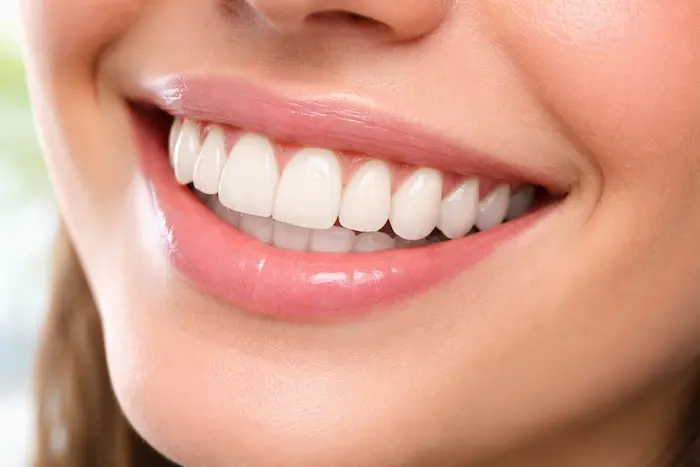
In the laboratory, the dental technician follows this shade information carefully while producing the porcelain crown. The final restoration is designed to match the neighbouring teeth in shape, size, and anatomical detail. When placed in the back of the mouth, porcelain crowns can be visually almost indistinguishable from natural teeth. In the front region, depending on the gum anatomy and the quality of the restoration, a highly aesthetic and harmonious smile can also be achieved.
How Should Porcelain Crowns Be Cared for After Treatment?
Porcelain crowns do not decay or discolour in the same way as natural tooth enamel. However, this does not mean oral hygiene can be neglected. The natural tooth structure beneath the crown and the surrounding gum tissue still need to remain healthy. The long-term success of porcelain crowns depends greatly on a consistent daily oral care routine.
Brushing and Interdental Cleaning: Crowned teeth should be brushed just like natural teeth, at least twice a day, using a fluoride toothpaste and a soft-bristled toothbrush. Special attention should be given to the area where the crown meets the gum, as this is one of the most common areas for plaque accumulation.
In addition to brushing, dental floss or appropriately sized interdental brushes should be used to clean between the teeth and around the crowns. If you have had bridge treatment, using special floss such as superfloss to clean underneath the bridge is clinically important.
Avoiding Physical Trauma: Metal-supported porcelain crowns are highly resistant to normal chewing forces. However, habits such as cracking nuts with the teeth, opening bottle caps, or biting pens can damage even natural enamel and may cause the porcelain layer to chip or fracture.
Regular Dental Check-Ups: Routine dental examinations and professional cleaning every six months help detect and manage minor gum problems before they progress. If you grind or clench your teeth at night, your dentist may recommend a protective night guard to reduce wear and protect the porcelain surfaces.
Restoring lost tooth structure is not only about improving the appearance of a tooth. It is also about protecting the wider health system that begins with chewing and extends to the jaw joint and digestive function. Porcelain crown treatments, when planned correctly, offer a durable, functional, and aesthetic solution that respects the natural chewing dynamics of the mouth.
Since 2003, our experienced clinical team has been providing porcelain crown treatments with careful diagnosis, patient-specific material selection, and high-precision laboratory support. Our aim is to deliver reliable treatment outcomes that meet aesthetic expectations while providing long-term comfort and function.
Frequently Asked Questions
Can my natural tooth decay underneath a porcelain crown?
When the procedure is performed correctly and the crown is bonded to the tooth with a secure dental cement, bacteria and food particles cannot enter underneath the restoration. For this reason, the tooth should not decay beneath the crown. Decay may only develop if oral hygiene is poor, the gum recedes, and the root surface below the crown margin becomes exposed. Regular brushing, interdental cleaning, and routine dental check-ups significantly reduce this risk.
Do porcelain crowns become yellow over time, and are they affected by tea or coffee?
No. Porcelain crowns are not affected in the same way as natural teeth. During the laboratory process, the porcelain surface is glazed and polished at high temperatures, creating a very smooth, glass-like surface. Because of this smooth structure, staining agents such as tea, coffee, red wine, or tobacco are much less likely to adhere to the porcelain surface. Even if your natural teeth become slightly darker over time, your porcelain crown can maintain its original shade for many years.
Will I have sensitivity or pain in my teeth after the procedure?
It is normal to experience mild sensitivity to very hot or very cold foods and drinks during the first few days after the crown is cemented. This is part of the natural adaptation process of the tooth and surrounding tissues. This sensitivity is usually temporary and should not develop into severe pain that affects daily life. If the tooth nerve is still healthy, the sensitivity generally improves and disappears within about one week.
What should I do if my crown falls off or breaks?
Crowns cemented with dental adhesive rarely come off on their own. This may happen if the underlying tooth structure has weakened or if a sticky or hard food, such as caramel, creates a sudden pulling force. If this happens, wrap the crown in a clean tissue and contact your dental clinic as soon as possible. If the crown is not damaged, your dentist can usually re-cement it safely during the same appointment.