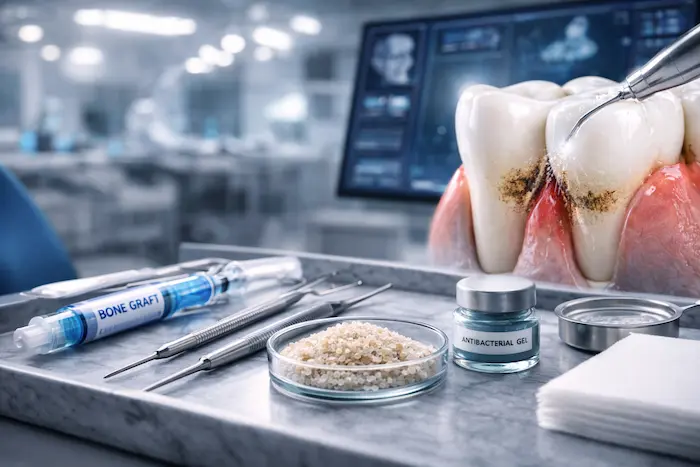
What is Gum Disease (Periodontal Disease)?
No matter how flawlessly a building’s architecture and facade are designed, if it is constructed on a weak and liquefied foundation, it is destined to collapse at the slightest tremor. The exact same principle applies to dentistry. Externally, your teeth may appear free of decay, perfectly white, and beautifully aligned; however, if the gum tissue (periodontium) that surrounds and firmly anchors those teeth to the jawbone is diseased, you face the risk of losing completely healthy teeth as they become loose. Periodontology is the branch of specialty that deals not just with the visible white portion of the tooth, but with these vital “foundation” tissues that keep it standing. Our clinical experience gained since 2003 shows us that no filling, crown, or implant treatment can be long-lasting unless gum health (pink aesthetics) is secured first.
The Biggest Misconception in Society: “Gum Bleeding is Normal”
The most dangerous misconception we most frequently encounter in patients applying to our clinic—and the one that paves the way for tooth loss—is accepting bleeding that occurs during tooth brushing or when biting into hard foods like apples as “normal.” We must state as a medical fact that healthy gums never bleed. Just as it is a sign of injury or infection if any part of our body (for instance, your arm) bleeds out of nowhere or when touched, gum bleeding is the first and clearest alarm of an active microbial war, that is, an infection in the area. This initial stage of gum inflammation, termed “Gingivitis” in medicine, manifests with red, swollen gums that bleed easily upon contact. At this stage, the disease is only in the soft tissue; with clinician intervention and correct brushing, it can be 100% reversed and cured without leaving any permanent damage.
The Threat from the Enemy: Bacterial Plaque and Dental Calculus
So, why do our gums become inflamed and bleed? The remnants of the foods we consume and the bacteria inside the mouth form a transparent, sticky film layer on the surfaces of the teeth and at the boundary where they meet the gum; we call this “bacterial plaque.” If this plaque is not removed every day through regular brushing and flossing, it combines with the minerals in our saliva and hardens, turning into rock-solid dental calculus.
Once dental calculus forms, it can no longer be removed by brushing. The rough surface of the tartar acts virtually as an incubation center for new bacteria to adhere to. The acids and toxins produced by these bacteria irritate the gums. The body’s immune system pumps more blood to the area to fight these bacteria; it is this cellular warfare that is the actual medical cause of the bleeding, swelling, and redness you see during brushing.
From a Local Issue to a Systemic Threat
Another topic that large health institutions usually overlook, but which we emphasize to our patients within our institutional medical discipline, is that gum diseases are not merely local problems concerning only the oral cavity. The bleeding areas in the gums are open doors through which millions of bacteria in the mouth mix directly into your bloodstream.
Modern medical research has proven that advanced gum diseases (infections) increase the risk of cardiovascular diseases, make blood sugar control more difficult for diabetes patients, and trigger the risk of premature birth or low birth weight in pregnant women. Consequently, the periodontal treatments applied in our clinic not only save your teeth but also directly protect your general body health and immune system.
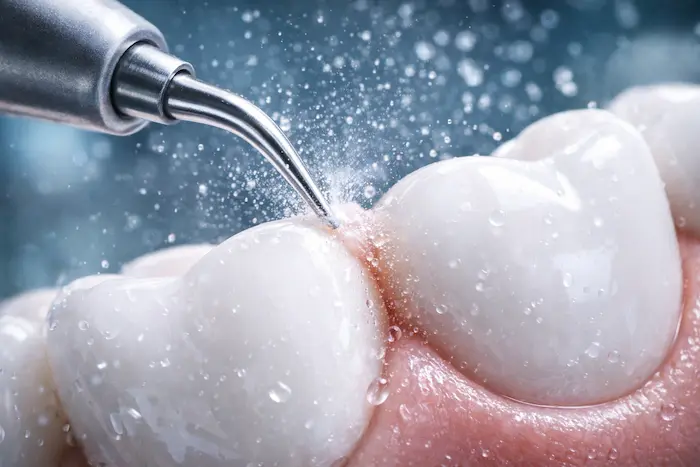
Progression of the Disease (Periodontitis) and Professional Dental Scaling (Detartrage)
When gum bleeding (gingivitis) is ignored and left untreated, the disease does not remain confined to the soft tissue; it begins to progress deeper, towards the jawbone that surrounds the root of the tooth. This advanced stage, which we encounter most frequently in our institutional clinical practice and is the number one cause of tooth loss, is called “Periodontitis.” While everything can be 100% restored to its original state with treatment during the gingivitis (gum inflammation only) stage, once the disease transitions into the periodontitis phase, “irreversible” resorption begins in the jawbone holding the tooth. Our goal is to detect the disease before it reaches that irreversible point and to halt the destruction in the jawbone.
The Gum Pocket (Periodontal Pocket): The Secret Hiding Place of Bacteria
In a healthy mouth, the gum tightly surrounds the tooth, just like a turtleneck sweater snugly wraps around your neck. However, when dental calculus (tartar) begins to accumulate on the tooth surface, this tight bond breaks. The gum moves away from the tooth to escape the diseased area, and millimetric gaps form between the tooth and the gum, which we call a “Gum Pocket” (Periodontal Pocket) in medical literature.
A normal brushing process can only reach up to 1-2 millimeters beneath the gumline. However, when these formed pockets reach depths of 4, 5, or 6 millimeters, it is physically impossible for a brush or floss to descend to that depth and clean it. The aggressive bacteria settling into those dark and oxygen-free deep pockets begin to resorb the tooth root and the jawbone from the inside out. The main objective of treatment is to descend to the very bottom of these pockets using specialized clinical instruments and completely disinfect those hidden bacterial nests.
The First Line of Defence: Detartrage (Dental Scaling)
In the branch of periodontology, regardless of the severity of the disease, the first and most vital step of treatment is “Detartrage,” meaning professional dental scaling. The brushing you perform at home only removes soft bacterial plaque; however, you cannot remove petrified (calcified) tartar by brushing.
The dental scaling applied in our clinic is performed not with old-school scraping methods, but with high-tech “Ultrasonic (sound wave) Cavitron” devices. The tips of these devices do not mechanically scrape the tooth; by vibrating tens of thousands of times per second and simultaneously spraying water, they fragment the dental calculus at a microscopic level and remove it from the tooth surface. No pain is felt during this procedure; only the coolness of the water and the slight vibration of the device are perceived. The detartrage process removes that dirty, rough, and diseased armor on the tooth, allowing the gum to firmly reattach to the clean tooth surface.
The Biggest Urban Legend: “Does Scaling Scratch Tooth Enamel?”
The most anxiety-filled question our patients address to us most frequently in the dentist’s chair is this: “If I have my dental calculus cleaned, will my tooth enamel thin out or will my teeth be scratched?”
This is one of the urban legends that causes the most harm to oral health in society. The tips of the ultrasonic scaling devices we use in our clinic are not sharp or piercing; they are blunt and smooth. The sound waves (vibration) produced by the device are adjusted to a frequency that affects only dental calculus (tartar), which is an inanimate structure. Medically, it is impossible to scratch or abrade the tooth enamel—the hardest biological tissue in the world—with these devices. Scaling causes absolutely no harm to your teeth; on the contrary, it prevents you from losing them.
The Misconception of “My Teeth Have Gapped and Are Shaking After Cleaning”
Following dental calculus cleaning, when patients occasionally check between their teeth with their tongue, they may get the impression that “the gaps between my teeth have widened” or “my teeth have started to shake.” The medical explanation for this is very clear: when the dental calculus that has accumulated there for years and filled the spaces between the teeth like concrete is cleaned, the original, true anatomy of your teeth is actually revealed. Those gaps your tongue feels are the natural anatomical spaces that are supposed to be there anyway.
Similarly, a tooth that is actually loose because the surrounding bone has resorbed might be held together by accumulated dental calculus “like a dirty plaster cast.” When this dirty plaster (the stones) is cleaned away, the true condition (the mobility) of the tooth is revealed. However, had those stones remained there, the infection would have completely resorbed the bone, causing the tooth to fall out shortly thereafter. Detartrage does not create the problem; rather, it is the most fundamental preventive treatment that halts the underlying issue.
Advanced Treatments: Curettage (Root Planing) and Laser Technology
While dental scaling (detartrage) is an excellent and necessary first step to remove tartar at the gumline and on visible surfaces, it is not enough to halt the disease once it progresses and the gum pocket (periodontal pocket) drops below 4–5 millimeters. Just as pruning a dying tree is insufficient and one must get to the diseased roots beneath the soil to save it, the clinician must descend much deeper into the gums to treat that area. In our institutional clinical protocols, we utilize “Root Surface Planing” (commonly known among the public as Curettage) and advanced technology laser systems to eliminate these deep infections that threaten the tooth root and the jawbone. Our goal is to heal the existing tissue from within without requiring a surgical operation (cutting the gums open).
When Superficial Cleaning is Not Enough: Why Curettage?
When dental calculus progresses into the depths of the gum (towards the root surface), it ruins the original and smooth root structure of the tooth. It creates a rough layer on the root surface that is filled with microorganisms and toxins (poisonous substances). The gum cannot biologically attach to this dirty and diseased root surface and constantly recedes from it. No matter how flawlessly you brush your teeth at home, this hidden infection on the root surface continues to live inside and gradually resorbs your jawbone.
Furthermore, the true source of “chronic bad breath” (halitosis), which is very common in society and often temporarily masked with mints or mouthwashes, is usually these deep gum pockets. These insidious bacteria, which breed in oxygen-free environments, produce sulfur gas that causes bad breath. Instead of masking the odor, the root surface planing procedure uproots and eliminates these bacteria factories that produce it.
Is Root Planing Painful? How is Root Planing Done?
The term “root planing” (deep cleaning) often makes patients worry about whether the procedure is painful. However, because this treatment is performed entirely under highly effective local anaesthesia, you will feel absolutely no pain or discomfort during the procedure.
During the procedure, your dentist gently accesses the natural pocket between the gum and the tooth using very fine, specialized hand instruments (scalers). No surgical incisions are made. The toxic layer, diseased tissues, and calcified build-up attached to the root surface are carefully scraped away with millimetric precision. This surface planing continues until the root of the tooth is perfectly clean and smooth. To keep you comfortable, this treatment is usually carried out meticulously over a few sessions by dividing the mouth into quadrants (e.g., upper right, upper left).
Modern Dental Care: Laser-Assisted Periodontal Treatment
In microscopic areas where traditional instruments cannot reach or are physically very difficult to clean, the “Dental Laser” systems in our clinic’s technological infrastructure come into play. The greatest value that laser technology brings to periodontics (gum diseases) is that very deep areas, which could previously only be cleaned by cutting the gum open with a scalpel (flap surgery), can now be disinfected without any stitches.
Following the root planing procedure, a fine laser fibre is guided directly into the gum pocket. Operating at a selective frequency, the laser beam targets only infected tissue and bacteria, vaporising and destroying them without causing any harm to healthy gums or teeth. Additionally, the laser’s biostimulation effect on the tissue immediately boosts blood flow to the cells, incredibly speeding up the post-treatment healing process and keeping the risk of swelling and sensitivity to an absolute minimum.
Post-Treatment Recovery: How Gums Reattach
The ultimate goal of root planing and laser treatments is to eliminate those deep, disease-harbouring gum pockets. Once the root surface is smooth and all the bacteria inside are sterilised by the laser, the body’s incredible cellular regeneration capacity takes over.
Within a few weeks following the procedure, loose, bleeding, and diseased gum tissue quickly firms up, regains its healthy light pink colour, and reattaches to the clean root surface like a protective seal. The gum pockets shrink or close up completely. The solid foundation holding your teeth together is rebuilt, and dangerous jawbone loss (destruction) is effectively halted.
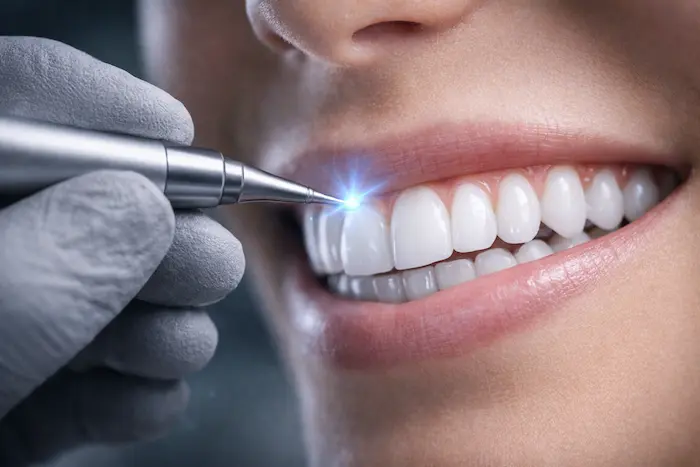
Advanced Surgical Treatments: Bone Grafts and Pink Aesthetic (Gum Contour) Procedures
When gum disease (periodontitis) is left neglected for many years, bacterial plaque doesn’t just contaminate the tooth root; it melts away the jawbone that holds the tooth firmly in place. Losing this bone support causes the tooth to become loose, and the gums start to recede down the root. While extraction used to be the only solution for teeth at this stage in the past, today, these teeth can be saved thanks to the advanced micro-surgery techniques performed within our clinical infrastructure. Our goal is not just to clear the infection, but to rebuild the lost bone and receded gums using tissue engineering principles.
A Surgical Window for Deep Cleaning: Flap Surgery
If the gum pocket (the gap between the root and the gum) has gone beyond 6 to 7 millimetres, trying to treat this depth blindly with standard instruments or lasers will not provide sufficient medical disinfection. At this stage, the most effective procedure to save the tooth from extraction is a “Flap Operation”.
This procedure is performed under highly effective local anaesthesia, ensuring the patient feels absolutely no pain. Your dentist gently lifts the gum tissue in the infected area using micro-surgical instruments—much like opening a small window to fully view the roots and bone. With a completely clear line of sight, hidden cysts, deep tartar, and inflamed tissues inside the bone are thoroughly cleaned with millimetric precision. Once the bone surface is sterile, the gum is seamlessly stitched back into its original position. This surgical access gives the dentist full visibility to ensure the infection is completely cleared.
Rebuilding Bone: Bone Grafts and Membrane Applications
Once the jawbone shrinks or melts away due to infection, the human body cannot fill that gap on its own. After clearing the inflammation during flap surgery, high-quality, fully biocompatible “Bone Grafts” (commonly known as bone powder) are placed into the lost bone areas surrounding the tooth.
These bone grafts act as a scaffold for your body’s own bone cells. A “barrier membrane” (a specialized protective layer) is then placed over the graft to stop fast-growing gum cells from invading the bone space. Over months of biological healing, your body’s live bone cells grow into this scaffold, creating brand-new, solid jawbone. Teeth that were once loose regain their stability thanks to this newly formed bone support.
Gum Recession and Root Coverage (Connective Tissue) Procedures
The most visible sign of bone loss from the outside is “Gum Recession”. When the gum shifts down towards the root, the yellowish, enamel-free and sensitive root surface of the tooth becomes exposed. This not only causes severe sensitivity when eating ice cream or drinking cold water, but it also makes the teeth look abnormally long and aged.
To resolve this aesthetic and functional issue, a gum “graft” procedure is performed. A tiny, completely natural and live piece of connective tissue—usually the size of a lentil—is taken from the roof of the patient’s mouth and transferred to the receded area using micro-stitches. This transferred tissue biologically fuses with the existing gum, covering the exposed root surface like a thick protective blanket to eliminate sensitivity and restore your smile’s aesthetics.
The Frame of Your Smile: “Pink Aesthetics” (Gummy Smile)
Periodontics does not just treat disease; it also perfects the appearance of your gums (Pink Aesthetics). Even without any underlying disease, some patients show too much gum when they smile (Gummy Smile), or their gum lines are uneven, with the gum being higher on one tooth and lower on another.
Even if you make the best and whitest porcelain teeth in the world, the final picture won’t look right if the frame (the gum line) is crooked. In our clinic, before moving on to aesthetic restorations (such as zirconium crowns or veneers), the gums are precisely aligned to the “golden ratio” rules using painless and bloodless laser technology. Excess gum tissue is vaporised with the laser to reveal the true length of the teeth. Gums that are treated, perfectly aligned, and restored to their healthy light pink colour are the absolute foundation of a flawless smile design.
Long-Term Protection (Maintenance Therapy) and Our Clinical Standards
Whether you have had a routine scale and polish (detartrage) or an advanced bone graft operation, success in periodontal treatments is measured years later at your clinical check-ups, not on the day your treatment ends. By nature, gum diseases (periodontitis) are chronic conditions that are highly prone to recurring. Even if treatment completely clears out all tartar and bacteria, bacterial plaque begins reforming on the tooth surface in just 24 hours due to your unique saliva composition and dietary habits. In our approach to clinical care, aesthetics and health are not just about a one-off procedure done in the chair; they represent a lifelong, uncompromising “tissue protection” partnership between patient and dentist.
The Most Critical Stage of Treatment: The Maintenance Phase
The protocol implemented to keep the teeth saved and the jawbone rebuilt through great effort and advanced technology healthy is known in medical literature as “Maintenance Therapy”. Following their treatment, our patients are recalled for routine check-ups every 3, 4, or 6 months, depending on the previous severity of their gum disease.
During these visits, your dentist uses precise probes to remeasure the old gum pockets from your illness. Any micro-tartar that has started to accumulate again in areas your toothbrush cannot reach is instantly cleared with ultrasonic devices before it can cause harm. If a patient stops attending their maintenance appointments, thinking “My gums have healed, I don’t need to go back anymore”, the bacteria in hidden pockets will regroup within months, and the disease will return with its former destructive severity (bone loss). The maintenance phase is the insurance policy for your newly achieved health.
Gum health is not just a support system that keeps your teeth in place; it is the absolute cornerstone of your overall bodily health, your immune system, and a flawless smile design (Pink Aesthetics). Every treatment detailed throughout our guide—including ultrasonic scaling, laser-assisted root planing, bone grafts, and connective tissue procedures—is performed with ultimate precision by our expert periodontists at our clinic. Grounded in our clinical philosophy since our establishment in 2003, we do not just offer you temporary whiteness, but an unshakable and healthy biological foundation that you can use with confidence for a lifetime.
Frequently Asked Questions
Will receded gums grow back and return to normal on their own over time?
No, absolutely not. Gum tissue does not possess the ability to regenerate or grow back on its own like hair or nails. Gums that have receded due to jawbone loss or aggressive brushing (trauma) can only be restored to their original position through specialist intervention and micro-surgical techniques, such as the “Connective Tissue Grafting” detailed in section four.
How does smoking affect gum disease?
Smoking constricts the blood vessels inside the mouth, severely reducing blood flow. This masks “bleeding”, which is the most critical warning sign of gum disease. Because patients do not see their gums bleeding, they mistakenly assume their mouth is healthy; however, insidious bone loss continues rapidly beneath the surface. Furthermore, because smoking prevents healing cells from reaching the affected area, it dramatically reduces the success rate of any gum treatments performed (such as root planing or flap surgery).
Is flossing really necessary, or is brushing alone enough?
The use of dental floss is an absolute medical necessity. A toothbrush can only clean the front, back, and chewing surfaces of the teeth. It is physically impossible for toothbrush bristles to penetrate the narrow interdental spaces where two teeth touch. Gum disease and insidious bone loss typically begin in these interproximal areas due to bacteria accumulating where the brush cannot reach. Dental floss is the only tool that protects these hidden spaces.
Could my gums be the cause of my bad breath (Halitosis)?
Highly likely yes. Excluding stomach or tonsil-related issues, the number one cause of chronic bad breath is deep gum pockets. These pocket bacteria, which live in an oxygen-free environment, produce sulphur gas, emitting an odour similar to rotten eggs or onions. When deep scaling and root planing are performed, these bacteria factories are destroyed, completely and permanently eliminating bad breath.
Is the gum contouring (Gummy Smile) procedure painful and how long does it take?
This procedure is no longer performed with old-school scalpels, but with advanced dental lasers. Because the tissue is instantly vaporised and capillaries are sealed during the laser process, there is no bleeding. Done under local anaesthesia, the patient feels absolutely no pain. It is usually completed within a single session (30-40 minutes), and the patient can return to their normal daily life the very next day.