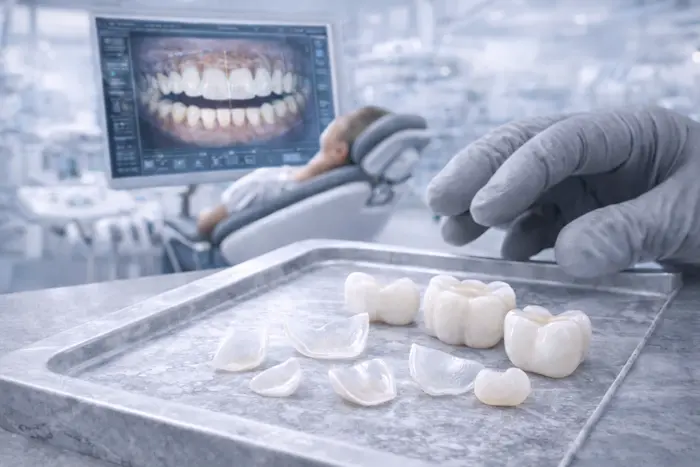
Dental fillings represent one of the most fundamental treatment approaches in modern dentistry, aimed at preserving the integrity and extending the lifespan of the natural tooth. Although often perceived simply as a procedure to “fill a cavity”, restorative treatment is in fact a precise biological and aesthetic reconstruction process in which tooth structure lost through decay, fracture, or wear is restored using highly biocompatible materials. Within an institutional clinical approach, fillings are not performed solely to eliminate pain, but to maintain occlusal balance, reinforce the structural integrity of the tooth, and prevent bacterial penetration into deeper tissues. Drawing upon our clinical experience since 2003, we recognise that timely and properly executed restorations remain one of the most effective ways of protecting teeth from the need for more complex procedures such as root canal treatment or extraction.
The Medical Necessity and Protective Role of Dental Fillings
Although enamel — the outermost layer of the tooth — is the hardest tissue in the human body, it may gradually weaken over time due to acidic dietary exposure, bacterial plaque accumulation, and inadequate oral hygiene habits. As the destructive process known as dental decay progresses into the deeper layers of the tooth, it approaches the pulp tissue containing the tooth’s neurovascular structures, leading to pain, sensitivity, and inflammation. According to contemporary clinical protocols and current medical literature, when decay is not treated at an early stage, the resulting infection may evolve into a chronic pathological focus capable of affecting not only the involved tooth, but also the surrounding gingival tissues and jawbone. For this reason, restorative filling treatment represents one of the most critical preventive interventions for preserving and restoring the long-term health and vitality of the tooth.
The Philosophy of Minimally Invasive Dentistry in Modern Clinical Practice
Traditional restorative approaches often required the removal of additional healthy tooth structure in order to mechanically retain the filling material. Modern dentistry, however, is founded upon the philosophy of minimally invasive treatment and maximum preservation of natural tissues. Because contemporary restorative materials are capable of bonding microscopically and chemically to the tooth surface, we now remove only the decayed and infected tissue while preserving the healthy remaining tooth structure entirely intact.
This highly conservative approach helps maintain the tooth’s natural strength and significantly reduces the likelihood of postoperative sensitivity. A modern restoration is therefore not merely a procedure to fill an empty space, but a precise reconstruction of the tooth’s original anatomy — including its fissures, cusps, and functional chewing surfaces — in harmony with its natural form and biomechanics.
The Harmony of Aesthetics and Function Through Biocompatible Materials
Within institutional healthcare standards, the quality of the restorative material used is one of the most important factors determining the longevity and success of treatment. Although traditional metal amalgam fillings were historically valued for their durability, they have now largely been replaced by modern biocompatible aesthetic restorative materials due to both their unaesthetic appearance and concerns associated with mercury content. The tooth-coloured composite restoration systems used within our clinic are available in a wide spectrum of shades designed to match the natural colour characteristics of the patient’s dentition with exceptional precision. These advanced materials transmit and reflect light in a manner similar to natural enamel, making the restoration virtually indistinguishable from the surrounding tooth structure. A successful restoration should integrate seamlessly with the natural tooth, without creating the impression that any dental treatment has been performed.
Are Dental Fillings Used Only for Treating Tooth Decay?
There is a widespread misconception that dental fillings are used solely for the treatment of tooth decay. In modern restorative dentistry, however, fillings also play a vital role in closing small gaps between teeth, repairing fractures caused by trauma, and restoring areas of cervical wear resulting from improper brushing techniques. Particularly in the anterior region, aesthetic restorative procedures can be used to modify the shape and proportions of teeth in order to create a more harmonious smile line. Within our institutional clinical approach, these treatments are designed not only to improve oral health, but also to strengthen the patient’s confidence and overall quality of life. Our goal is for every patient to leave our clinic with restored dental health and a natural, confident smile.
Aesthetic Approaches and Bonding Applications in Modern Dental Restorations
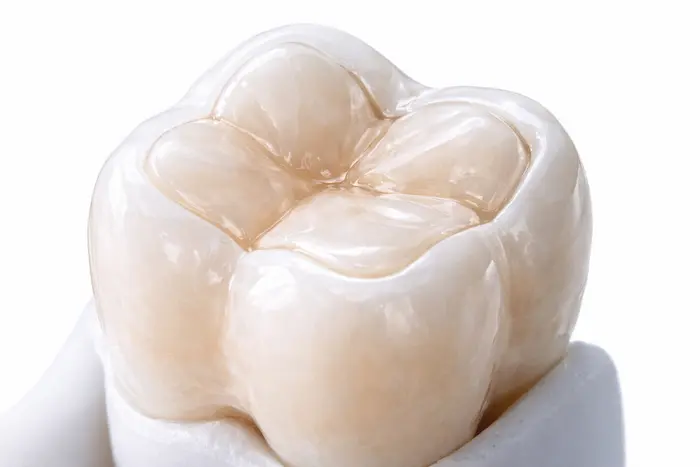
Advances in modern dental technology have transformed restorative procedures from purely medical necessities into highly aesthetic treatments designed to replicate the natural form and appearance of the tooth. In the past, conventional approaches used to treat anterior tooth decay, fractures, or structural deformities often resulted in restorations with an artificial appearance. Today, however, the aesthetic composite restorations and bonding techniques performed within our clinic allow highly natural and harmonious results to be achieved while preserving the integrity of the natural tooth structure.
Aesthetic Fillings: Technology Designed to Replicate Natural Tooth Structure
The true success of a dental restoration lies not only in its durability, but in its ability to remain virtually invisible within the natural dentition. The materials used in aesthetic fillings are specifically engineered to replicate the light-transmitting and reflective properties of natural enamel. Current medical research and international clinical protocols demonstrate that these next-generation composite materials form a microscopic bond with the tooth structure, providing exceptionally high sealing ability. This advanced adhesion significantly reduces the risk of recurrent decay developing beneath the restoration. During the application process, the tooth’s colour tone, translucency, and unique surface characteristics are recreated layer by layer, allowing the final restoration to blend seamlessly with the natural tooth and become virtually indistinguishable from the surrounding dentition.
Bonding Applications: Aesthetic Refinement Without Damaging Natural Enamel
The bonding technique — often referred to by patients as “composite laminate” treatment — is one of the most conservative aesthetic procedures in modern dentistry. Its primary purpose is to close gaps between teeth (diastema), mask minor alignment irregularities, and restore worn or fractured tooth edges while preserving the natural tooth structure. The most important distinction between bonding and traditional veneer or crown procedures is that no shaving or cutting of the tooth surface is required. Instead, the enamel is gently conditioned at a microscopic level using specialised solutions, after which the restorative material is artistically sculpted and bonded directly onto the tooth with exceptional precision. This minimally invasive approach allows the natural tooth tissue to remain almost entirely preserved while achieving highly aesthetic and natural-looking results.
Colour Matching and Long-Term Aesthetic Stability
One of the most common concerns patients have regarding aesthetic restorations is whether fillings will become discoloured over time. The advanced nano-technology composite materials used within our clinic possess exceptionally high polish retention and surface stability. Following the restorative procedure, a professional polishing stage is performed to achieve a level of smoothness comparable to that of natural enamel. This ultra-smooth surface significantly reduces the ability of external staining agents such as tea, coffee, and tobacco to adhere to the restoration. Within an institutional clinical approach, the success of aesthetic restorations is evaluated not only by their immediate appearance, but by their ability to preserve their natural colour, brightness, and aesthetic integrity for many years.
Why Should Aesthetic Fillings and Bonding Treatments Be Preferred?
Aesthetic fillings and bonding procedures represent one of the clearest examples of the philosophy of “maximum aesthetics with minimal intervention.” These treatments can typically be completed within a single appointment, allowing patients to achieve an enhanced smile without interrupting their social or professional lives. Because the biological integrity of the tooth remains preserved, future treatment options are not compromised. Our objective is not merely to provide patients with teeth free from decay, but to create smiles that restore confidence, maintain functional strength, and appear entirely natural. Since 2003, we have approached every restorative procedure with the responsibility of preserving the original architecture and biological value of the natural tooth.
Porcelain Fillings: Maximum Protection with Inlay and Onlay Restorations
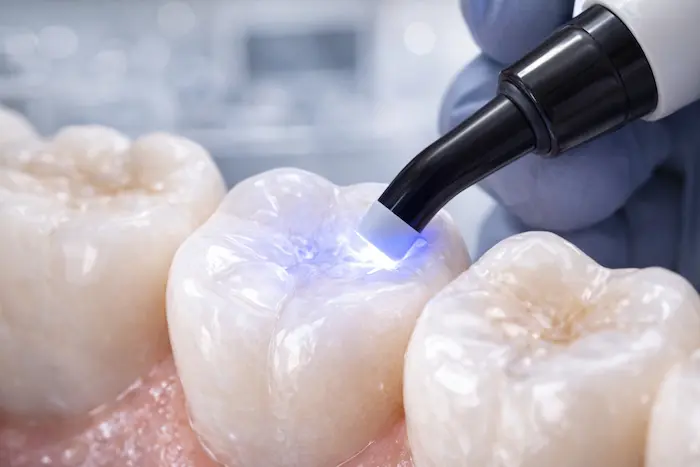
In certain clinical situations, the loss of tooth structure caused by decay or fracture may be too extensive to be predictably restored with a conventional filling, yet not severe enough to require full crown preparation and coverage. In these intermediate cases, Inlay and Onlay restorations — commonly referred to as porcelain fillings — provide an advanced restorative solution that exceeds the structural limitations of traditional fillings while reproducing the tooth’s natural anatomy with exceptional laboratory precision. Within an institutional clinical approach, these restorations are preferred as high-technology treatment options designed to preserve the remaining healthy tooth structure while providing maximum resistance against functional chewing forces.
What Are Inlay and Onlay Restorations, and How Do They Differ from Conventional Fillings?
Conventional fillings are restorative materials placed directly into the tooth by the clinician during the treatment appointment. Inlay and Onlay restorations, by contrast, are custom-designed indirect restorations produced from solid porcelain blocks in a dental laboratory using precise digital impressions of the tooth structure. When the restoration is confined within the cusps of the tooth, it is referred to as an Inlay; when it extends to cover one or more cusps due to more extensive structural loss, it is classified as an Onlay. According to current clinical protocols and modern dental literature, porcelain restorations demonstrate significantly greater resistance to wear and fracture compared with conventional composite fillings. In addition, because their marginal adaptation is fabricated and optimised under laboratory conditions with microscopic precision, the risk of leakage and recurrent decay is reduced to a minimum.
Perfect Adaptation Through CAD/CAM Technology
Within our clinic, porcelain restoration procedures are managed through a fully digital workflow. Following the removal of decayed tissue, advanced intraoral scanners are used instead of conventional impression materials to create a precise three-dimensional digital map of the tooth. This digital data is then transferred to computer-aided design and manufacturing systems (CAD/CAM), where the restoration is fabricated with exceptional precision. The resulting porcelain restoration accurately reproduces the missing anatomical structures of the tooth — including fissures, cusps, and natural contact points with adjacent teeth. This level of technological accuracy allows the restoration to integrate seamlessly with the natural dentition as though it were part of the original tooth itself, while also eliminating common issues associated with conventional fillings, such as food impaction between teeth.
Biocompatibility and Gingival Health
One of the greatest advantages of porcelain restorations is their exceptional compatibility with the surrounding gingival tissues. The surface texture of porcelain is significantly smoother than that of conventional composite materials and demonstrates a high resistance to bacterial plaque accumulation. This characteristic is particularly important in large restorations extending into the interproximal areas between adjacent teeth, where maintaining gingival health is essential for long-term success. In addition, porcelain restorations remain dimensionally stable over time and do not undergo volumetric shrinkage. This structural stability helps prevent the formation of microscopic gaps between the restoration and the natural tooth, creating one of the most reliable barriers against recurrent internal decay and bacterial leakage.
Why Should Porcelain Restorations Be Preferred?
Porcelain restorations represent one of the most prestigious applications of the “minimal intervention” philosophy in modern dentistry, often allowing teeth to be preserved without the need for full crown coverage. Rather than reducing and covering the entire tooth, only the missing or damaged portion is restored while the healthy remaining tooth structure is carefully preserved. Drawing upon our clinical experience since 2003, we recognise that posterior molar teeth are subjected to extremely high chewing forces, and porcelain remains one of the most durable medical-grade materials capable of withstanding these functional demands over the long term. From an aesthetic perspective, porcelain restorations harmonise so naturally with the colour, translucency, and optical properties of the surrounding tooth structure that even a trained professional eye may struggle to distinguish them from natural enamel. Our objective is to provide patients with restorations that combine exceptional durability with uncompromising natural aesthetics for many years of reliable function.
Post-Restoration Care: Adaptation, Long-Term Function, and Maintenance
Although a successful dental restoration may appear complete once the procedure has finished in the clinical chair, its long-term success is directly related to the adaptation period following treatment and the patient’s commitment to proper oral care. Modern restorative materials are engineered to withstand functional chewing forces immediately after placement; however, the biological structures of the tooth and surrounding tissues still require a period of adaptation and careful maintenance in order to achieve optimal long-term stability. Within our institutional healthcare philosophy, our objective extends beyond simply treating decay — we aim to ensure that each restoration functions comfortably and naturally as an integrated part of the patient’s dentition for many years to come.
Post-Restoration Adaptation and Sensitivity Management
Following restorative treatment, particularly in cases involving deep decay removal, temporary tooth sensitivity is considered a normal and expected part of the adaptation process. Current medical literature and international clinical protocols indicate that the dentin layer of the tooth requires time to adapt to the newly placed restorative material, while the nerve endings gradually stabilise — a process that may occasionally take several weeks. During this period, brief sensitivity to very hot or cold foods and beverages is generally regarded as normal. If a sensation of “highness” or premature contact is noticed after the filling procedure, it should be corrected through minor occlusal adjustment, as uneven biting forces may otherwise lead to discomfort in the tooth or temporomandibular joint during chewing. Although the advanced precision techniques used within our clinic significantly minimise this risk, patient feedback remains extremely valuable in achieving ideal functional balance and long-term comfort.
The Golden Principles for Prolonging the Lifespan of Dental Restorations
The longevity of dental restorations depends not only on the quality of the materials used, but also on the patient’s oral hygiene habits and dietary behaviour. Regardless of whether the restoration is composite or porcelain, one of the greatest threats to its durability is the uncontrolled consumption of excessively hard substances, such as chewing ice or cracking hard-shelled foods with the teeth. In addition, patients who suffer from teeth grinding or clenching (bruxism) may expose restorations to excessive uncontrolled forces capable of causing microfractures, material fatigue, or restoration failure over time. In such cases, digitally designed night guards are used to protect both the natural teeth and the restorations from harmful mechanical stress. It should always be remembered that no matter how perfectly a restoration is performed, preserving the surrounding natural tooth structure ultimately depends upon the patient’s long-term care and protective habits.
Daily Maintenance and Gingival Compatibility
The cleaning of restored teeth is not fundamentally different from that of natural teeth; however, it requires a higher level of attention and consistency. In particular, interproximal restorations—fillings located between contacting teeth—are more prone to food accumulation. These areas cannot be adequately cleaned by toothbrushing alone; therefore, the regular use of dental floss or interdental brushes is essential to prevent plaque accumulation at the restoration margins and the onset of secondary decay. At the gum-tooth interface, brushing should be performed using a gentle sweeping motion from the gingiva toward the tooth surface, which is clinically important for maintaining the integrity of the restoration–gingival seal. Healthy gum tissue remains one of the most important natural factors supporting the long-term durability of dental fillings.
Importance of Periodic Dental Check-Ups
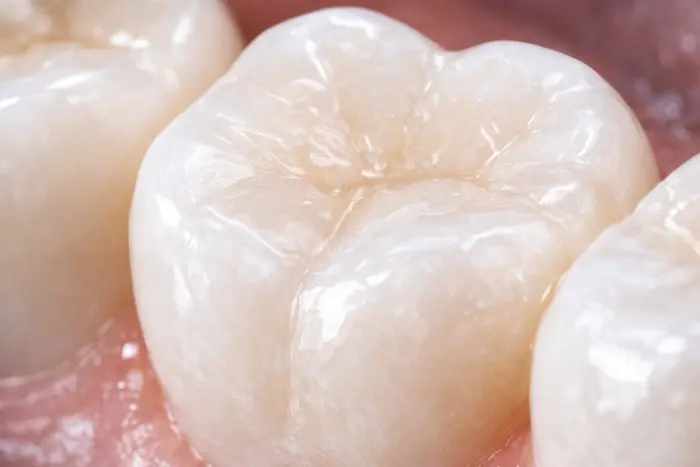
Waiting until a filling “falls out” is often an indication that a deeper underlying decay has already developed beneath it. Within an institutional clinical approach, we recommend biannual periodic check-ups during which the marginal integrity, structural stability, and gingival relationship of restorations are carefully evaluated using professional diagnostic tools. In many cases, minor wear or early-stage leakage can be managed with simple polishing or small repair procedures, without the need to replace the entire restoration. Drawing upon our experience since 2003, we firmly believe that preventive dentistry is fundamentally about detecting potential problems before they develop. Our aim is to preserve the patient’s treatment investment with the highest level of comfort, safety, and long-term durability.
All aesthetic filling, bonding, and porcelain restoration procedures described in this article are performed with meticulous care by our expert clinical team within our practice. Since 2003, our experience and digital infrastructure have enabled us to protect oral health using the most conservative and advanced treatment methods available. Dental restoration today is no longer merely a treatment for existing problems, but a comprehensive process that extends the biological lifespan of the tooth. Whether using standard composite fillings or advanced porcelain restorations, the primary objective remains the same: restoring health while preserving natural tooth structure without compromise. Managed within a structured clinical system, and combined with accurate material selection and specialist expertise, this approach provides patients with long-lasting and reliable dental rehabilitation. It should always be remembered that the best treatment is the one that preserves the natural tooth structure to the highest possible degree.
Frequently Asked Questions
How Long Does a Dental Filling Last?
The lifespan of a dental filling varies depending on the material used and the patient’s oral hygiene habits. Composite (white) fillings typically last an average of 5–10 years, while porcelain (inlay/onlay) restorations can last 15 years or more under optimal conditions. Regular dental check-ups play a key role in maximising the longevity of these restorations.
Should I Replace My Old Amalgam (Metal) Fillings?
If your amalgam filling shows signs of fracture, marginal leakage, or secondary decay beneath the restoration, replacement is clinically indicated. In addition, for patients with aesthetic concerns, replacing these restorations with biocompatible composite (tooth-coloured) fillings represents a modern and widely accepted treatment approach.
Is It Normal to Experience Pain After a Dental Filling?
In cases where deep decay has been removed, mild sensitivity during the first few weeks is considered normal. However, if there is sharp pain during chewing or a persistent throbbing sensation, a clinical examination is essential to evaluate whether the filling needs occlusal adjustment or whether root canal treatment may be required.
Does Bonding Treatment Damage My Teeth?
No. Aesthetic bonding (composite bonding) is performed without any significant removal of tooth structure, as the procedure is based primarily on adding material to the existing tooth surface. For this reason, it is widely regarded as one of the most conservative and tooth-preserving aesthetic treatment options in modern dentistry.
Do Composite Fillings Change Colour Over Time?
Thanks to new-generation nano-composite materials and advanced professional polishing techniques, modern restorations are highly resistant to staining and discoloration. However, in individuals with high consumption of tea, coffee, or tobacco, superficial surface staining may still occur over time, similar to natural teeth. In most cases, these changes can be easily managed with routine professional dental cleaning and polishing procedures.
What Is the Difference Between a Porcelain Filling (Inlay/Onlay) and a Conventional Filling?
Conventional fillings are shaped directly inside the mouth during the clinical appointment, whereas inlay and onlay restorations are custom-made porcelain restorations fabricated in a dental laboratory based on precise digital impressions of the patient’s teeth. This approach is particularly beneficial in cases where there is significant tooth structure loss, as it often allows the tooth to be restored without the need for full crown (capsule) preparation, offering a more conservative solution. Due to the properties of porcelain, these restorations provide superior resistance to wear, excellent compatibility with the surrounding gum tissue, and highly aesthetic results that closely resemble natural tooth structure and are virtually indistinguishable from it.