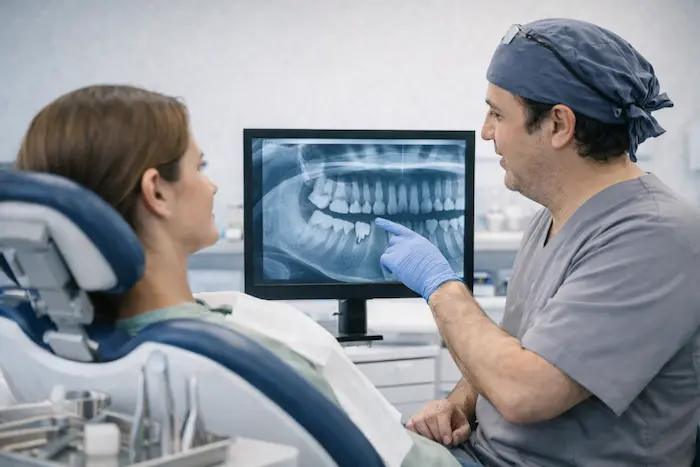
Tooth extraction is the procedure of removing a problematic tooth from its socket based on the dentist’s clinical judgment. Not every dental issue requires extraction. In modern dentistry, the primary goal is to preserve the natural tooth whenever possible. However, in some patients, extraction may become the most appropriate option due to advanced tooth decay, irreparable damage to the tooth root, the risk of infection spreading to surrounding tissues, severe mobility, impacted teeth, or orthodontic requirements. Therefore, the process is not simply considered as “removing a painful tooth”; the condition of the tooth, surrounding tissues, medical history, and long-term oral health are all evaluated together.
What Is Tooth Extraction and In Which Situations Is It Necessary?
Although tooth extraction may seem like a simple procedure, it is a medical intervention that requires careful planning. The decision is made by evaluating the patient’s complaints, clinical examination findings, and, when necessary, radiographic assessments together. In some cases, the source of pain may not be the tooth itself; surrounding gum tissues, root-tip infections, or impacted teeth can also produce similar symptoms.
One of the most common reasons for extraction is advanced decay affecting a large portion of the tooth structure. While some teeth can be preserved through treatments such as fillings, root canal therapy, or crowns, others may have such extensive damage that maintaining their function safely is no longer possible. In addition, extraction may be considered for teeth fractured due to trauma, separated at the root level, or causing repeated infections that negatively affect the surrounding bone.
Advanced gum disease is another significant cause. When supporting tissues weaken, tooth mobility may develop, leading to pain, sensitivity, or functional difficulties during chewing. In such situations, attempting to keep the tooth in place may not always be the most appropriate approach. The dentist evaluates the remaining support, infection risk, and the protection of neighboring teeth together.
In some orthodontic treatment plans, selected teeth may need to be removed due to lack of space. This decision is made not only for aesthetic reasons, but also to improve bite alignment, tooth positioning, and long-term oral function. Similarly, impacted or partially erupted teeth may require intervention if they cause inflammation, pressure, pain, or damage to adjacent teeth and tissues. Particularly in cases involving impacted tooth extraction, the root structure, proximity to nerves, and relationship with the jawbone must be carefully examined in detail.
Does Every Painful Tooth Need to Be Extracted?
No. This is one of the most common questions patients ask. The presence of pain alone does not automatically mean that a tooth must be extracted. Some teeth can be preserved through root canal treatment, restorative procedures, or periodontal therapies. In fact, even teeth causing severe pain can sometimes be maintained in the mouth with the appropriate treatment. For this reason, extraction is generally considered one of the last treatment options.
On the other hand, some patients try to keep teeth that have caused long-term problems, recurrent infections, or significant loss of function, assuming that they can “manage somehow.” This approach is not always safe. Uncontrolled infection may affect the surrounding bone tissue and neighboring teeth. Therefore, the decision should always be made based on an individual evaluation.
How Is Tooth Extraction Performed?
The answer to the question “How is tooth extraction performed?” depends on whether the procedure is carried out as a simple extraction or requires a surgical approach. Teeth that are fully visible, have a suitable root structure, and can be removed using standard techniques may only require a conventional procedure. However, a more advanced approach may be necessary for fractured teeth, teeth with curved roots, teeth embedded within the bone, or impacted teeth.
Before the procedure, the first step is a comprehensive evaluation. The patient’s medications, blood thinner use, diabetes, high blood pressure, heart disease, pregnancy status, allergy history, and previous surgical procedures must all be reviewed carefully. This is because a safe procedure depends not only on the condition inside the mouth, but also on the patient’s overall health. If necessary, consultation with the patient’s physician may also be planned.
On the day of the procedure, the relevant area is numbed with local anesthesia. The goal is to ensure that the treatment is performed without pain. Once adequate numbness is achieved, the tooth is carefully separated from the surrounding tissues and removed from its socket using appropriate instruments. In simple extractions, the process is usually shorter. In cases requiring surgical tooth extraction, a controlled incision may be made in the gum tissue, bone-level intervention may be necessary, and the tooth may be sectioned into smaller parts for safer removal. This approach is especially important in procedures such as impacted tooth extraction in order to protect the surrounding tissues.
What Is the Difference Between Simple Tooth Extraction and Surgical Tooth Extraction?
In a simple extraction, the visible tooth is removed using standard techniques. Surgical tooth extraction, on the other hand, is generally preferred in more complex cases. Teeth located beneath the bone, teeth with a fractured crown portion, challenging root structures, or impacted positioning may fall into this category. A surgical approach indicates that the procedure is more complex, but it also means that a more controlled and carefully planned method is being applied.
Is Pain Felt During the Procedure?
Under local anesthesia, the primary sensation expected during the procedure is pressure or pushing rather than pain. Patients may feel touch or pressure in the area, and this should not be confused with pain. If genuine pain is felt during the procedure, the dentist should be informed immediately. Additional anesthesia can be administered when necessary to improve comfort during the treatment.
What Is Evaluated Before Deciding on Tooth Extraction?

In a well-planned extraction process, not only the problematic tooth but also the healing period afterward is taken into consideration. The patient’s bone structure, oral hygiene, smoking habits, presence of active infection, and how the area is expected to heal after extraction are all evaluated carefully. This is because the post-procedure period is just as important as the extraction itself. Although the tooth extraction healing period may vary from person to person, the main priorities during the first days are protecting the blood clot, managing pain, and avoiding irritation to the area.
Another important factor is the patient’s expectations. Some individuals may view extraction as the easier option because they are seeking a quick solution. However, every tooth plays a role in chewing balance, speech, and the support of surrounding structures. For this reason, the decision to extract a tooth should not be made hastily, but only when it is truly necessary.
Preparation Before Tooth Extraction and Important Considerations During the First 24 Hours After the Procedure
When a tooth extraction is planned, it should be understood that the process involves more than just the procedure itself. Preparation before the treatment, precautions to follow on the day of the procedure, and the first 24 hours afterward all play a crucial role in ensuring healthy healing. In particular, the blood clot that forms within the extraction socket is an important structure that naturally protects the wound during recovery. If this clot becomes dislodged, pain may increase, bleeding may continue for longer, and the healing process can be negatively affected. For this reason, the dentist’s recommendations should not be seen as general advice alone, but as an essential continuation of the treatment process.
Why Is Preparation Before Tooth Extraction Important?
Before the procedure, the patient’s overall health condition should be carefully evaluated. Regularly used medications—especially blood thinners, diabetes treatments, blood pressure medications—as well as heart conditions, allergy history, pregnancy status, and any significant past medical conditions must be reported to the dentist. This is because tooth extraction is not planned the same way for every patient. While a standard procedure may be sufficient for some individuals, others may require a more carefully tailored preparation process.
Many patients also wonder whether they should stop taking their medications before the procedure on their own initiative. The most important point is that no medication should ever be discontinued without consulting the dentist or physician. Particularly for patients using blood thinners, both stopping medication without guidance and proceeding without proper evaluation can be inappropriate. The safest approach is always individualized treatment planning.
Another frequently asked question is whether fasting is necessary on the day of the procedure. For standard treatments performed under local anesthesia, prolonged fasting is generally not required. However, avoiding very heavy meals and being cautious not to traumatize the mouth while numbness persists after the procedure may help improve comfort. It is also important for the patient to be well-rested and, if possible, mentally prepared in a way that helps reduce stress before the treatment.
What Should Patients Expect on the Day of the Procedure?
Although the answer to the question “How is tooth extraction performed?” may vary depending on the condition of the tooth, the overall process generally follows a similar course. First, the relevant area is numbed with local anesthesia. The goal is to ensure that the procedure is carried out without pain. During the treatment, patients may usually feel pressure, pushing, or pulling sensations. These sensations are not the same as pain. If genuine pain is experienced, it should be communicated to the dentist immediately.
In simple cases, the tooth is carefully removed from its socket in a controlled manner. In situations requiring surgical tooth extraction, the process may differ slightly. More detailed procedures may be necessary, especially for fractured teeth, teeth with challenging root structures, or cases involving impacted tooth extraction. This should not create unnecessary concern for the patient. A surgical approach indicates that the procedure is being planned and performed in a more controlled and safer manner.
After the procedure is completed, a gauze pad is usually placed over the extraction site. Biting on this gauze for the recommended period helps control bleeding. Mild blood-tinged oozing immediately after the procedure is not always abnormal. However, the most important point is to avoid repeatedly checking the area and to refrain from behaviors that could interfere with blood clot formation.
What Should Be Done During the First 24 Hours?
The first 24 hours represent the most critical stage of healing. During this period, the main goal is to protect the blood clot that forms in the extraction socket. For this reason, the patient should bite on the gauze provided by the dentist for the recommended duration and then leave the area undisturbed as much as possible. Constant spitting, vigorous rinsing, touching the area with the tongue or fingers, or manipulating the extraction site should all be avoided.
Engaging in heavy exercise, lifting weights, frequent bending, or intense physical activity on the same day may also increase the risk of bleeding. Therefore, it is advisable to spend the day resting calmly after the procedure and to prioritize recovery. Avoiding positions where the head is kept too low and refraining from unnecessary physical exertion during the first hours can be beneficial for bleeding control.
How Much Bleeding Is Normal After Tooth Extraction?
Bleeding after tooth extraction is usually not heavy or continuous. Slight pink discoloration in the saliva, mild oozing during the first hours, or small blood stains on the gauze may occur. Although this can cause concern for patients, it does not always indicate a serious problem. However, active bleeding that continues for an extended period, does not decrease despite applying gauze pressure, or remains significant should be evaluated more carefully.
In some patients, bleeding control may be more difficult. Conditions affecting blood clotting, certain medications, or frequent disturbance of the extraction site can negatively influence the healing process. For this reason, if bleeding persists or the patient feels the amount is excessive, the dentist should be consulted.
An important factor here is the patient’s ability to protect the area properly. Constantly checking the extraction site in the mirror, repeatedly opening the mouth to inspect the area, consuming hot beverages, or immediately returning to a busy daily routine after the procedure may increase post-extraction bleeding complaints.
Is Pain After Tooth Extraction Normal?
Pain after tooth extraction can be felt to some extent, especially once the effect of the anesthesia begins to wear off. In most cases, this is considered a normal part of the healing process. The level of discomfort may vary depending on the type of procedure performed. While simple extractions may cause only mild sensitivity, discomfort can be more noticeable after surgical tooth extraction because of the greater level of tissue intervention involved.
To manage pain properly, medications recommended by the dentist should be used regularly and exactly as instructed. Patients should not take random medications on their own or act outside the prescribed treatment plan. In particular, if the pain increases instead of decreasing over the following days, becomes throbbing in nature, or is accompanied by bad odor or an unpleasant taste, the situation should be evaluated more carefully.
At this point, the possibility of dry socket and alveolitis becomes important. This condition may develop when the blood clot inside the extraction socket is disrupted, leading to pain that is more severe than expected. Especially when pain becomes pronounced several days after the extraction, radiates to surrounding areas, and persists despite standard painkillers, a dental evaluation is necessary.
Why Is Smoking Harmful After Tooth Extraction?
Smoking after tooth extraction is one of the main factors that can negatively affect the healing process. Smoking may impair blood circulation in the wound area and make it more difficult to protect the blood clot formed within the extraction site. In addition, the suction effect created during smoking can dislodge the clot. This may increase the risk of dry socket and prolong the healing period.
For this reason, smoking should be avoided during the initial recovery period. The same approach applies to alcohol consumption. Irritating drinks and habits may delay the healing of the area. How carefully the patient follows post-procedure recommendations during this period can have a direct impact on the tooth extraction healing process.
What Is the Main Principle of the First Day After Tooth Extraction?
The main goal of the first day after tooth extraction is to protect the treatment area and support the body’s natural healing process. Patients should remain calm, follow the dentist’s instructions carefully, monitor signs of pain and bleeding appropriately, and avoid unnecessarily disturbing the area. Some degree of pain and bleeding after tooth extraction can be expected; however, symptoms that progressively worsen should not be considered normal.
In summary, a successful healing process depends not only on a well-performed procedure, but also on proper aftercare habits. Protecting the blood clot during the first 24 hours, avoiding physical strain, refraining from smoking, and preventing trauma to the area can help ensure a more comfortable recovery in the following days.
Nutrition, Oral Care, and the Healing Process After Tooth Extraction
After tooth extraction, some of the most common concerns patients have involve dietary habits, how oral care should be maintained, and how long the healing process will take. Even if the procedure itself is completed successfully, problems such as pain, sensitivity, bleeding, or delayed healing may occur if the aftercare process is not managed properly. For this reason, the post-extraction period should be considered an essential continuation of the treatment.
Especially during the first few days, the foods consumed, beverage choices, oral hygiene habits, and smoking can directly affect the healing process. The level of care the patient demonstrates during this period not only improves comfort but also reduces the risk of unwanted complications such as dry socket.
What Can Be Eaten After Tooth Extraction?
The question of what to eat after tooth extraction is one of the most frequently asked by patients. During the first few hours, the effects of anesthesia may still be present, so very hot foods and beverages should be avoided. While the mouth is numb, it is possible to accidentally bite the cheek, lips, or tongue without noticing. For this reason, it is best to wait until the numbness begins to wear off and then choose soft, lukewarm foods.
For the first day, options such as yogurt, lukewarm soup, mashed foods, pureed vegetables, soft cheese, and bananas are generally more suitable because they are easy to consume and reduce chewing pressure. The goal is both to provide the body with the energy it needs and to avoid straining the extraction area. When eating, it is preferable to chew on the side opposite the extraction site whenever possible. This helps prevent direct pressure on the wound area.
An important point to remember is that it is not enough for foods to simply be “soft.” The temperature of the food, its ingredients, and the residue it may leave in the mouth are also important. Very hot soups, excessively spicy foods, and foods containing hard particles are not suitable during the initial recovery period. In addition, using a straw during the first days is not recommended. The suction created while drinking through a straw may dislodge the blood clot formed in the extraction socket, which can interfere with proper healing.
Which Foods Should Be Avoided?
After tooth extraction, hard, crusty, crumbly, seeded, or granular foods should be avoided for a period of time. Foods such as chips, toasted bread, nuts, tough meat pieces, seeded fruits, sesame-coated products, or items that easily break into small particles in the mouth may enter the extraction socket. This can irritate the area and make cleaning more difficult.
Excessively hot foods are also not recommended. Increased heat may affect blood circulation and contribute to continued oozing or bleeding. Very cold foods, on the other hand, may cause sensitivity in some patients. For this reason, consuming lukewarm and balanced meals is generally more comfortable. Spicy, acidic, and irritating foods may also increase discomfort, especially during the first few days.
Just as smoking after tooth extraction can negatively affect healing, certain dietary habits may also make recovery more difficult. Alcohol, highly acidic beverages, and carbonated drinks are not recommended during the early healing period. These may irritate the area and increase oral sensitivity. Paying careful attention to nutrition for a short period can help prevent longer-lasting discomfort and complications.
How Should Oral Care Be Maintained After Tooth Extraction?
One of the most common mistakes patients make is either avoiding cleaning the extraction area altogether or, conversely, interfering with it excessively. However, oral hygiene should not be completely neglected. If oral cleaning is ignored, the bacterial load in the mouth may increase. On the other hand, aggressively brushing the extraction socket or rinsing the mouth repeatedly is also not appropriate.
During the first 24 hours, the extraction site should not be disturbed directly. After this period, unless the dentist provides different instructions, oral hygiene can be continued carefully. The remaining teeth should be brushed normally, but with gentler movements. Direct and forceful contact with the extraction area should be avoided, and the wound site should not be strained.
Some patients wonder, “There is a bad taste in my mouth—should I rinse constantly?” In reality, frequent and forceful rinsing, especially during the early healing phase, may disrupt the blood clot. The key principle of oral care during this period is gentleness. Aggressive mouthwash use, excessive spitting, or constantly moving water around the extraction site in an attempt to clean it are not recommended. A calm and controlled approach is essential.
How Long Does the Healing Process Take After Tooth Extraction?
The healing period after tooth extraction is not the same for every patient. This is influenced not only by the type of procedure performed, but also by factors such as the patient’s age, overall health condition, oral hygiene, smoking habits, the location of the extracted tooth, and whether the extraction was simple or surgical. In simple procedures, superficial soft tissue healing may occur more quickly, whereas recovery may take longer after surgical extractions or impacted tooth removal.
During the first days, the primary goal is to protect the blood clot and keep pain and bleeding under control. Over the following days, sensitivity is generally expected to decrease gradually. While the soft tissues may appear to close relatively early, complete healing of the bone and deeper tissues takes more time. For this reason, even if patients begin to feel better, they should avoid immediately returning to habits or activities that may strain the area.
Some patients are surprised when pain increases several days after the extraction. However, this does not always fit the normal healing pattern. If the discomfort was mild during the first days but later becomes severe, throbbing, or radiates toward the ear, dry socket should be considered. In this condition, also known as alveolitis, the protective structure within the extraction socket may have been disrupted. Therefore, not only the presence of pain but also the way it progresses is important.
Why Are Dry Socket and Alveolitis Important?
Dry socket is a painful condition that may develop when the protective blood clot that should form in the extraction site becomes disrupted or lost. Patients often describe it as, “I was managing during the first few days, but then it suddenly became worse.” The pain may be sharp, deep, and radiating in nature. A bad taste or unpleasant odor in the mouth may also accompany the condition.
This complication is more commonly associated with situations in which post-extraction instructions are not followed carefully. Smoking during the early healing period, drinking through a straw, disturbing the extraction area, forceful rinsing, or completely neglecting oral hygiene may all increase the risk. Not every extraction leads to dry socket; however, if patients are aware of the possibility, they may recognize the symptoms earlier and seek professional care promptly.
When dry socket develops, professional evaluation is necessary rather than simply waiting at home for it to improve. This is because the problem is not merely ordinary sensitivity. Instead of assuming that “it will probably pass on its own,” patients should take noticeable changes in the pattern or intensity of pain seriously and consult their dentist.
When Can Patients Return to Daily Life After Tooth Extraction?
Most patients are able to return to their daily routines within a relatively short time. However, the speed of this return depends less on how well the patient feels and more on how properly the extraction site is healing. Avoiding heavy physical activity during the first day is important. In the following days, patients may begin to feel more comfortable, but habits such as hard chewing, intense exercise, smoking, and activities that place pressure on the mouth should not be resumed immediately.
Especially after surgical tooth extraction or impacted tooth removal, mild facial swelling, difficulty opening the mouth, or sensitivity lasting for several days may occur. This does not always indicate a complication. However, if swelling progressively increases, fever develops, unpleasant odor appears, clear signs of infection are present, or pain becomes uncontrolled, further professional evaluation is necessary.
What Is a Simple Tooth Extraction?
A simple tooth extraction is a procedure performed for teeth that are visible in the mouth and can be removed using standard techniques. In most cases, the crown portion of the tooth is accessible, and after numbing the area with local anesthesia, the dentist carefully removes the tooth from its socket in a controlled manner. These procedures are generally shorter in duration and may involve less tissue intervention.
However, the term “simple” does not mean that the procedure is insignificant. Every tooth extraction requires medical evaluation. The root structure may differ from what is expected, surrounding tissues may be sensitive, or the patient’s overall medical history may affect the process. For this reason, even a tooth that appears straightforward requires careful planning. Although healing after a simple extraction is often more comfortable, complications such as bleeding, pain, or disruption of the blood clot can still occur if post-procedure care instructions are not followed properly.
What Is Surgical Tooth Extraction?
Surgical tooth extraction is performed for teeth that are difficult to remove using standard techniques or require a more controlled approach. Factors such as a fractured tooth, challenging root positioning, a tooth embedded within the bone, partial eruption, or a close relationship with surrounding tissues may make this method necessary. In such cases, simply grasping and pulling the tooth is not sufficient. The dentist carefully intervenes in the gum tissue and, when necessary, the surrounding bone to complete the procedure safely.
Patients often become unnecessarily anxious when they hear the term “surgical tooth extraction.” However, this approach actually allows the problem to be managed in a more controlled manner. The goal is to remove the tooth in a planned and safe way while minimizing damage to the surrounding tissues. After these procedures, it is possible to experience slightly increased sensitivity, mild swelling, or temporary difficulty opening the mouth. These findings are not always abnormal. Nevertheless, the progression of symptoms should be monitored carefully.

When Is Impacted Tooth Extraction Necessary?
Impacted tooth extraction becomes necessary when a tooth remains completely or partially trapped within the jawbone or soft tissue. One of the most common examples is impacted wisdom teeth, although the condition is not limited to this area alone. Extraction may be planned if the tooth cannot erupt in the proper direction, creates pressure on surrounding tissues, poses a risk of damaging adjacent teeth, causes recurrent infections, or makes oral hygiene difficult.
Not every impacted tooth must automatically be removed. The decision is made by considering factors such as the presence of symptoms, history of infection, the position of the tooth, its relationship with surrounding anatomical structures, and the likelihood of causing future problems. In some cases, a completely asymptomatic impacted tooth may simply be monitored over time. In other situations, intervention may be recommended even before severe pain develops, due to potential future risks.
Cases involving impacted tooth extraction require more detailed evaluation. The root structure of the tooth, surrounding bone tissue, and proximity to important anatomical structures all play a significant role in treatment planning. For this reason, the procedure requires more careful preparation than a routine extraction. Informing the patient beforehand is also important so they can better understand the possible sensitivity and recovery process after the procedure.
Is Every Difficult Extraction Considered Surgical?
Patients sometimes assume that a procedure taking longer automatically means it is a surgical extraction. However, not every lengthy procedure falls into the same category. Some visible teeth may also require more careful work because of their root structure. Likewise, certain surgical extractions may proceed in a controlled and well-planned manner, making the experience more comfortable than the patient initially expects. What matters most is not the duration of the procedure, but the technique used and the anatomical characteristics of the tooth.
For this reason, comparing one’s own situation with the experience of a friend or family member can be misleading. Even procedures described with the same name may present very different clinical conditions depending on the individual’s oral anatomy. The most accurate information can only be provided after a personal examination and appropriate imaging assessments.
What Are the Possible Risks and Complications of Tooth Extraction?
As with any medical procedure, tooth extraction may involve certain risks and complications. Most of these can be minimized through careful planning and proper aftercare. The most common issues include pain, mild bleeding, swelling, sensitivity, and limited mouth opening. These symptoms may be somewhat more noticeable after surgical tooth extraction. However, it is important to distinguish between expected postoperative symptoms and abnormal progression.
Bleeding after tooth extraction is usually limited to mild oozing during the first few hours. Prolonged bleeding, active bleeding that continues without improvement, or bleeding severe enough to concern the patient should be evaluated professionally. Similarly, pain after tooth extraction may occur during the first days, but it is generally expected to decrease over time. If the pain becomes progressively worse, throbbing, or radiates toward the ear or jaw, dry socket should be considered.
Dry socket, also known as alveolitis, may develop when the blood clot that protects the extraction site becomes disrupted or lost. Patients often describe this condition as a deeper and more intense pain than expected. A bad taste or unpleasant odor in the mouth may also accompany it. Smoking during the early healing period, disturbing the extraction area, vigorous rinsing, and failure to follow aftercare instructions can all increase this risk.
In addition, signs of infection such as progressively increasing swelling, difficulty swallowing, fever, visible pus formation, or severe restriction in jaw movement should be taken seriously. Not every swelling indicates an infection; however, if the condition continues to worsen over time, seeking professional evaluation rather than waiting is the more appropriate approach.
In Which Situations Should the Dentist Be Consulted Again?
It is important for patients to understand which symptoms are considered normal and which require professional attention. Some complaints may be part of the expected healing process, while others may require early intervention. A dentist should be consulted again in the following situations:
- If the pain becomes progressively more severe
- If active bleeding continues for a prolonged period despite applying gauze pressure
- If bad odor and unpleasant taste in the mouth become more noticeable
- If increasing facial swelling, fever, or fatigue develops
- If difficulty opening the mouth gradually worsens
- If unexpected signs of infection or pus appear at the extraction site
- If numbness lasts unusually long or abnormal loss of sensation occurs
These symptoms do not always indicate a serious complication, but they should not be ignored. Rather than trying to self-diagnose through information found online, it is safer for the patient to seek a professional clinical evaluation.
What Is the Patient’s Role in Reducing Risks After Tooth Extraction?
A successful healing process depends not only on the procedure performed by the dentist, but also on the patient’s behavior afterward. Especially during the first few days, resting, following the dentist’s instructions carefully, avoiding smoking, refraining from constantly checking the area, and using prescribed medications correctly can all help reduce the risk of complications. It should be remembered that smoking after tooth extraction significantly increases the risk of dry socket. Likewise, consuming very hot foods, chewing hard foods, engaging in habits that strain the mouth, or completely neglecting oral hygiene may negatively affect healing.
Even after a simple extraction, careless behavior by the patient can complicate the recovery process. On the other hand, in cases involving surgical tooth extraction or impacted tooth removal, recovery may progress more comfortably than expected when post-procedure recommendations are followed properly. For this reason, the quality of aftercare is just as important as the type of procedure itself.
Frequently Asked Questions
Is Tooth Extraction a Painful Procedure?
Thanks to local anesthesia, sharp pain is generally not expected during the procedure. Patients may feel pressure or pulling sensations. After the extraction, mild to moderate sensitivity or discomfort may occur.
How Many Days Does Pain Last After Tooth Extraction?
The duration of pain varies depending on the type of procedure performed. After a simple extraction, discomfort may decrease within a shorter period, whereas it can last somewhat longer after surgical procedures. In general, the pain is expected to gradually lessen over time.
Is Bleeding Normal After Tooth Extraction?
Mild oozing or slight bleeding may occur during the first few hours after tooth extraction. However, prolonged or active bleeding is not considered normal and should be evaluated professionally.
What Can Be Eaten After Tooth Extraction?
During the first few days, soft, lukewarm, and non-irritating foods should be preferred. Hard, very hot, and crumbly foods should be avoided.
Why Is Smoking Harmful After Tooth Extraction?
Smoking can interfere with healing at the extraction site and may dislodge the blood clot. This can increase the risk of developing dry socket.
What Is Surgical Tooth Extraction?
It is an extraction method used for teeth that are difficult to remove with standard techniques and require a more controlled and carefully planned approach.
Is Impacted Tooth Extraction Always Necessary?
No. Not every impacted tooth needs to be extracted. The decision is made by evaluating the patient’s symptoms, the risk of infection, and the potential impact on surrounding tissues.
What Is Dry Socket?
Dry socket is a condition that develops when the protective blood clot formed in the extraction socket becomes disrupted or lost, and it is typically associated with severe pain.
What Is Alveolitis?
Alveolitis refers to the painful condition, commonly known as dry socket, in which healing at the extraction site becomes disrupted.
What Factors Affect the Healing Time After Tooth Extraction?
The healing time is influenced by factors such as the complexity of the procedure, the patient’s overall health condition, oral hygiene, smoking habits, and how well post-treatment care instructions are followed.