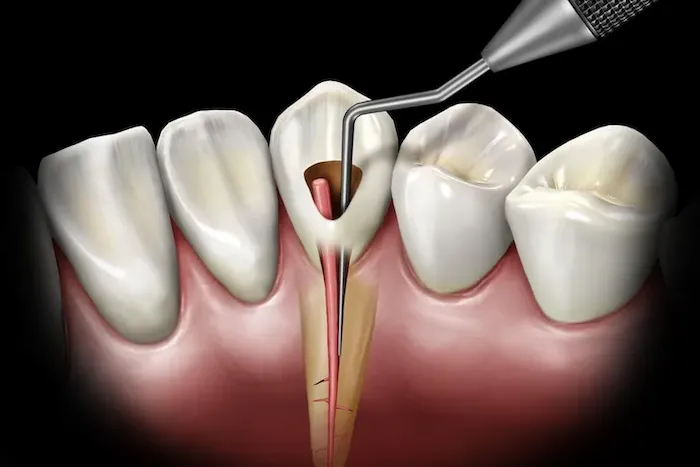
Root canal treatment in Turkey is a dental procedure performed when the nerve and blood vessel tissue inside the tooth becomes damaged due to infection, decay, or trauma. The main goal of this treatment is to preserve the natural tooth and keep it functional in the mouth instead of extracting it. Root canal treatment becomes especially important in cases of deep cavities, advanced infections, and severe tooth pain.
A tooth consists of three main layers: the enamel on the outer surface, dentin underneath, and the innermost living tissue called the pulp. The pulp contains nerves, blood vessels, and connective tissue. When tooth decay reaches this living tissue or when the tooth experiences trauma, inflammation or damage may occur. In such cases, a simple filling is no longer sufficient. The infected tissue must be removed, and the root canals must be carefully cleaned and sealed using specialized techniques. This procedure is known as root canal treatment.
For many people, root canal treatment is associated with a painful and difficult experience. However, with modern dental techniques, local anesthesia, and advanced equipment, the procedure is usually far more comfortable than expected. In most cases, the severe pain patients experience before treatment is much more uncomfortable than the treatment itself. The purpose of root canal treatment is not to create pain, but to eliminate the infection causing it.
If left untreated, the infection can gradually spread to the tip of the tooth root. This may lead to gum swelling, facial sensitivity, abscess formation, and serious discomfort while chewing. In advanced situations, tooth extraction may eventually become necessary. For this reason, root canal treatment is important not only for relieving pain, but also for preserving the tooth in the long term.
With properly planned root canal treatment, the natural tooth can remain healthy and functional in the mouth, chewing ability can be maintained, and tooth loss can often be prevented. This provides significant advantages both aesthetically and in terms of overall oral health. Preserving the natural tooth is generally considered far more valuable than undergoing more extensive procedures that may be required after tooth extraction.
What Is the Purpose of Root Canal Treatment?
Root canal treatment is performed to clean the infected or damaged tissue inside the tooth and preserve the tooth within the mouth. By removing the source of the pain, the treatment prevents the spread of infection and allows the natural tooth to continue functioning without the need for extraction. In short, it is one of the most important procedures for saving a natural tooth.
Root canal treatment not only resolves the existing problem, but also helps prevent more serious complications that may develop in the future. Early intervention can significantly reduce the risks of infection spreading into the bone tissue, abscess formation, or eventual tooth loss. For this reason, root canal treatment is designed not only to eliminate current pain, but also to protect long-term oral health and prevent future dental problems.
In Which Situations Is Root Canal Treatment Necessary?
Root canal treatment is not required for every type of tooth pain. In some cases, a simple filling may be sufficient, while in others, the living tissue inside the tooth may be irreversibly damaged. Whether root canal treatment is necessary is determined through a combination of clinical examination, radiographic imaging, and evaluation of the patient’s symptoms.
One of the most common reasons is deep tooth decay. Once decay progresses beyond the enamel and dentin layers, it can reach the pulp tissue. At this stage, symptoms such as persistent pain, throbbing, and sensitivity to hot or cold may occur. If the infection has reached the nerve tissue, a filling alone is no longer enough, and root canal treatment becomes necessary.
Dental trauma can also require root canal treatment. Sometimes, after a fall or a strong impact, the patient may not immediately notice severe symptoms. However, over time, the tooth may darken in color, internal tissue damage may develop, and the nerve may lose its vitality. Teeth that change color after trauma should always be carefully evaluated.
Advanced fractures or cracked teeth are another common reason for root canal treatment. If a crack extends into the deeper layers of the tooth, bacteria can easily penetrate and affect the pulp tissue. In such cases, patients may experience pain while chewing or sudden sensitivity. Root canal treatment may help preserve the tooth and prevent extraction.
Leakage beneath old or large fillings can also lead to the need for root canal treatment. When bacteria enter through the edges of an existing restoration, the inner structure of the tooth may become affected. This condition may sometimes progress silently for a long time, while in other cases it may present with pain and sensitivity. Teeth that have undergone repeated dental procedures are particularly vulnerable to weakening of the nerve tissue.
Some patients may notice swelling in the gums, an abscess, or a small pimple-like lesion near the affected tooth. This may indicate an infection at the tip of the tooth root. In certain cases the pain can be severe, while in others the infection may drain, causing only a feeling of pressure. However, such conditions should never be ignored.
What Are the Symptoms That May Indicate the Need for Root Canal Treatment?
The most common symptom indicating the need for root canal treatment is severe tooth pain. Pain that intensifies at night, begins spontaneously, and persists for a long time is particularly significant. The temporary disappearance of pain does not necessarily mean the problem has resolved. In some cases, when the living tissue inside the tooth becomes completely damaged, the pain may decrease while the infection continues to progress silently.
Prolonged sensitivity to hot and cold foods or drinks is another important warning sign. Normally, sensitivity disappears quickly, but when the nerve tissue is affected, the discomfort may last much longer. If pain continues for several minutes after consuming hot coffee, tea, or cold water, a detailed dental evaluation is recommended.
Pain during chewing or tenderness when pressure is applied to the tooth may also indicate the need for root canal treatment. This can suggest that the infection has spread to the tissues surrounding the tooth root. If discomfort increases while biting or chewing, professional examination should not be delayed.
Some teeth may also develop discoloration. Teeth that have experienced trauma can gradually turn gray or brown, which may indicate loss of vitality inside the tooth. Although not every color change requires root canal treatment, such changes should always be carefully assessed.
Swelling of the gums, tenderness, a bad taste in the mouth, or occasional discharge may also be signs of infection. In these situations, the infection may have spread beyond the tooth and reached the root tip. Early diagnosis is therefore extremely important, as it both simplifies treatment and increases the likelihood of saving the natural tooth.
How Is Root Canal Treatment Performed?
Root canal treatment is a procedure performed to remove infected or damaged tissue from inside the tooth and seal the root canals. Before starting the treatment, the dentist first performs a clinical examination and, if necessary, takes X-rays to evaluate the root structure of the tooth and the extent of the infection. This allows the scope of the treatment to be clearly determined.
Before the procedure begins, the area is numbed with local anesthesia. For this reason, patients generally do not feel pain during root canal treatment. Although this is one of the biggest concerns for many patients, the goal of modern root canal treatment is not to create pain, but to eliminate the existing source of pain and infection.
Once the area is fully numb, a small opening is created on the top surface of the tooth. Through this opening, the dentist gains access to the root canals. The inflamed or damaged pulp tissue inside the tooth is then carefully removed using specialized instruments. Afterward, the root canals are thoroughly cleaned and shaped. This is one of the most critical stages of the procedure, as the aim is to eliminate bacteria from inside the canals as completely as possible.
Following the cleaning stage, the canals are disinfected using special solutions. In cases where the infection is more severe, the dentist may place medication inside the canal and wait several days before completing the procedure. In milder and more suitable cases, root canal treatment can often be completed in a single session.
Once the canals are sufficiently cleaned and disinfected, they are sealed with special filling materials to prevent bacteria from re-entering the canal space. In the final stage, the upper portion of the tooth is restored with a filling. In some teeth where significant structural loss has occurred, a dental crown may later be recommended for additional strength and protection.
How Many Sessions Does Root Canal Treatment Require?
Root canal treatment can sometimes be completed in a single session, while in other cases two or more appointments may be necessary. The number of sessions depends on factors such as the number of root canals in the tooth, the severity of the infection, the structure of the tooth, and whether the tooth has been treated previously.
Front teeth generally have fewer root canals, which often allows treatment to be completed more quickly. Molars, however, usually contain multiple canals, making the procedure more detailed and time-consuming. The canal anatomy of back teeth can be particularly complex.
If there is an active infection, abscess, or inflammation around the root tip, the treatment may need to be divided into multiple sessions. In such cases, the canals are first cleaned, medication may be placed inside the tooth if necessary, and the tooth is temporarily sealed. During the following appointment, the root canal filling procedure is completed.
Teeth that have undergone unsuccessful root canal treatment in the past may also require a longer treatment process. In these situations, the previous root canal filling must be removed, the canals must be re-cleaned, and the tooth must be carefully reassessed. These retreatment procedures are generally more delicate and complex than the initial treatment.
In summary, it is not always possible to give an exact timeline for root canal treatment. However, the most important point for patients is this: even if multiple sessions are required, the main goal is to clean and preserve the tooth properly for long-term success. Correct treatment is far more important than completing the procedure quickly.
Is Root Canal Treatment Painful?
Thanks to modern local anesthesia techniques, root canal treatment is generally completed in a comfortable manner. During the procedure, patients may feel slight pressure, vibration, or movement, but sharp pain is not expected. In most cases, the severe pain is actually experienced before the treatment, during the active infection stage.
After the procedure, mild soreness, sensitivity when biting, or slight discomfort while chewing may occur for a few days. This is usually temporary. Particularly in infected teeth, the surrounding tissues may require some time to heal and recover.
However, if the pain gradually worsens, facial swelling develops, or the patient becomes unable to bite down on the tooth at all, a follow-up examination with the dentist is necessary. In some cases, additional evaluation or treatment may be required.
What Should Be Considered After Root Canal Treatment?
After root canal treatment, certain precautions should be taken to support the healing process and ensure the long-term success of the treated tooth. Although the infection inside the tooth has been treated, the durability of the tooth depends not only on the procedure itself but also on proper care and protection afterward.
Patients should avoid chewing on the treated side until the numbness caused by local anesthesia has completely worn off. While the area is still numb, it is possible to accidentally bite the cheek, lips, or tongue without noticing. For this reason, extra caution is recommended during the first few hours after treatment.
If the final filling or dental crown has not yet been completed, hard foods should be avoided. A tooth that has undergone root canal treatment—especially one with significant structural loss—may be more vulnerable to fractures. Remaining with a temporary filling for an extended period may also increase the risk of complications.
Good oral hygiene should never be neglected. Some patients hesitate to brush around the treated area, but regular cleaning is actually very important. Teeth should be brushed gently, dental floss should continue to be used, and care should be taken to prevent the development of new cavities or gum problems.
Any medications prescribed by the dentist should be used exactly as recommended. In certain cases, pain relievers or additional supportive medications may be advised. Self-medicating with antibiotics or leaving the treatment incomplete is not appropriate.
Mild sensitivity after root canal treatment is generally considered normal. However, if the pain gradually increases, facial swelling develops, a bad taste or discharge appears, or the tooth feels unusually high when biting, a follow-up appointment may be necessary. In some cases, the bite may need adjustment or additional treatment may be required.
Is a Dental Crown Necessary After Root Canal Treatment?
Not every tooth treated with root canal therapy requires a dental crown. This decision depends on the location of the tooth and the amount of remaining tooth structure. Especially in front teeth, if the loss of tooth tissue is minimal, it may be possible to restore the tooth successfully with a strong filling alone. However, crowns are more commonly recommended for back teeth, which are exposed to greater chewing forces.
Molars are generally at a higher risk of fracture after root canal treatment. This is because these teeth bear heavier chewing loads and are often already weakened by extensive decay. In such situations, a dental crown acts as a protective outer structure that helps reinforce and preserve the tooth.
If the tooth contains a large filling, has thin remaining walls, or has suffered significant structural loss, the likelihood of requiring a crown increases. In some cases, fiber-reinforced restorative techniques may also be considered. The most appropriate treatment option is determined entirely through clinical evaluation.
One of the most common mistakes patients make is assuming that the tooth is completely safe once the root canal treatment is finished. In reality, delaying the final restoration may lead to fractures, leakage, or compromise the long-term success of the treatment. For this reason, if the dentist recommends a permanent restoration, it should not be postponed.
Can Root Canal Treatment Fail?
Root canal treatment has a high success rate. However, as with any medical procedure, certain risks and complications may still occur. Complex root canal anatomy, unnoticed accessory canals, advanced infections, or inadequate final restorations can all affect the long-term success of the treatment.
Some teeth may remain problem-free for many years after treatment, while others may develop a new infection months or even years later. This can happen due to leakage from the upper restoration, the development of new decay, or the formation of cracks within the tooth.
In cases where root canal treatment fails, immediate extraction is not always the first option. In many situations, retreatment of the root canal can be considered first. If necessary, advanced procedures such as apical surgery (root-end surgery) may also be recommended. However, if the tooth structure has become too severely damaged, extraction may eventually be unavoidable.
The most important point is this: even after successful root canal treatment, the tooth should not be neglected for life. Regular dental examinations, proper oral hygiene, and a well-designed final restoration play a crucial role in maintaining the long-term success and durability of the treated tooth.
Root Canal Treatment Prices 2026

Root canal treatment prices in 2026 vary depending on the number of root canals in the tooth, the severity of the infection, whether the procedure is being performed for the first time or as a retreatment, and the type of filling or crown restoration required afterward. For this reason, it is not accurate to provide a single fixed price for every patient.
Since front teeth generally have fewer canals, the treatment cost may be lower, whereas molars often contain multiple canals, making the procedure more complex and increasing the overall treatment fee.
Can Root Canal Treatment Be Repeated?
Yes, in some cases root canal treatment can be repeated. If pain, sensitivity, or infection develops again in a previously treated tooth, the old root canal filling can be removed and the canals can be cleaned and treated once more. This procedure is often more detailed than the initial treatment, as missed canals may need to be identified, previous filling materials must be removed, and the tooth must be carefully reassessed.
Reasons for requiring root canal retreatment may include incomplete cleaning during the first procedure, leakage from a filling or crown, the development of new decay, or the formation of cracks within the tooth. A recurring infection does not automatically mean that the tooth must be extracted. In suitable cases, retreatment can successfully preserve the tooth and maintain its function within the mouth.
Frequently Asked Questions
Does Root Canal Treatment Hurt?
Thanks to local anesthesia administered during root canal treatment, the procedure is generally completed comfortably. Patients may feel slight pressure during the treatment, but sharp pain is not expected. Mild sensitivity for a few days after the procedure is considered normal.
How Long Does Root Canal Treatment Take?
The duration of root canal treatment depends on the location of the tooth, the number of root canals, and the severity of the infection. Treatment for single-rooted teeth is generally completed more quickly, while multi-rooted molars may require a longer and more detailed procedure. In some cases, treatment can be completed in a single session, while more complex situations may require multiple appointments.
How Many Sessions Does Root Canal Treatment Require?
In some teeth, root canal treatment can be completed in a single session. However, in cases involving advanced infection, abscess formation, or retreatment, the procedure may need to be divided into two or more appointments. The most important factor is not how quickly the treatment is completed, but ensuring that it is performed correctly and thoroughly.
Is Pain Normal After Root Canal Treatment?
After the procedure, mild pain, soreness, or sensitivity while chewing may occur for a few days. In most cases, this is temporary and part of the normal healing process. However, if the pain gradually worsens, facial swelling develops, or biting on the tooth becomes difficult, a follow-up dental examination is necessary.
Why Does a Tooth Hurt After Root Canal Treatment?
The tissues surrounding the treated tooth may remain sensitive after the procedure. In addition, depending on the severity of the infection, the healing process may require some time. In some cases, a high filling or uneven bite contact can also cause pain or discomfort.
Can a Tooth Hurt Again After Root Canal Treatment?
Yes, in some cases pain can return after root canal treatment. This may be caused by new decay, leakage, cracks in the tooth, or the development of a recurrent infection. In such situations, the tooth should be carefully re-evaluated by a dentist.
Can a Root Canal Treated Tooth Still Need to Be Extracted?
After a successful root canal treatment, the tooth can remain healthy and functional in the mouth for many years. However, extraction may become necessary if there is a severe fracture, advanced bone loss, or an infection that cannot be controlled despite treatment.
Is a Dental Crown Necessary After Root Canal Treatment?
A dental crown is not necessary for every tooth after root canal treatment. Especially in front teeth with minimal structural loss, a filling may be sufficient. However, crowns are more commonly recommended for back teeth, teeth with extensive tissue loss, or teeth that carry a higher risk of fracture.
What Factors Affect Root Canal Treatment Prices in 2026?
Prices vary depending on the number of root canals in the tooth, the severity of the infection, whether the procedure is being performed for the first time or as a retreatment, and the type of filling or crown restoration required afterward. For this reason, the exact treatment cost is determined after a clinical examination.
Is Root Canal Treatment or Tooth Extraction the Better Option?
In suitable cases, preserving the natural tooth is generally considered the more beneficial option. After tooth extraction, the missing area may need to be restored with implants, bridges, or other dental procedures. For this reason, if there is a chance to save the tooth, conservative treatments are usually prioritized.