
Dental fillings are one of the most fundamental restorative dental treatments used to repair teeth that have been damaged by decay, fractures, cracks or wear. The aim of a filling is not simply to “close a hole”. A well-planned dental filling restores the natural shape of the tooth, supports chewing function, protects the remaining healthy tooth structure and helps prevent further tissue loss. When a small cavity is not treated at the right time, it can progress deeper into the tooth. At first, the enamel and dentine are affected; if left untreated, the decay may eventually approach the nerve tissue. At this stage, a simple filling may no longer be sufficient, and more advanced treatment such as root canal therapy may be required. In modern dentistry, fillings are not used only for cavities. They may also be recommended for small fractures, worn teeth, replacement of old restorations, minor aesthetic corrections and areas where tooth structure has been weakened. When performed at the correct time, a dental filling can be a conservative and effective way to preserve the natural tooth before more extensive treatment becomes necessary. Every filling is planned individually. The material and technique are selected according to the size of the defect, the location of the tooth, the chewing forces in that area, aesthetic expectations and the amount of healthy tooth structure remaining. For front teeth, a natural appearance is often the main priority. For back teeth, strength, durability and long-term marginal fit become especially important. It is also important to understand that a filling is not the solution for every dental problem. If the decay has reached the pulp, root canal treatment may be needed. If the tooth is severely broken or has lost too much structure, a crown, inlay, onlay or another restorative option may be more appropriate. For this reason, the decision to place a filling should always be based on a clinical and, when necessary, radiographic assessment.
Who Can Have a Dental Filling?
Dental fillings are most commonly performed for patients who have tooth decay. However, they may also be suitable for teeth that are cracked, chipped, worn or have old fillings with leakage or damaged margins. Patients do not need to have severe pain in order to require a filling. In many cases, early decay can be detected during a routine dental examination before it causes discomfort. Treating a small lesion at an early stage can help prevent the need for more complex procedures in the future. Fillings may be used in children, young adults and older patients, but the treatment approach may vary according to age, tooth development, oral hygiene, bite forces and the condition of the surrounding tissues. In some patients, fillings act as a protective treatment before the problem progresses. When the aim is to preserve the natural tooth, early intervention can often reduce the risk of extraction, root canal treatment or more advanced prosthetic procedures.
Types of Dental Fillings
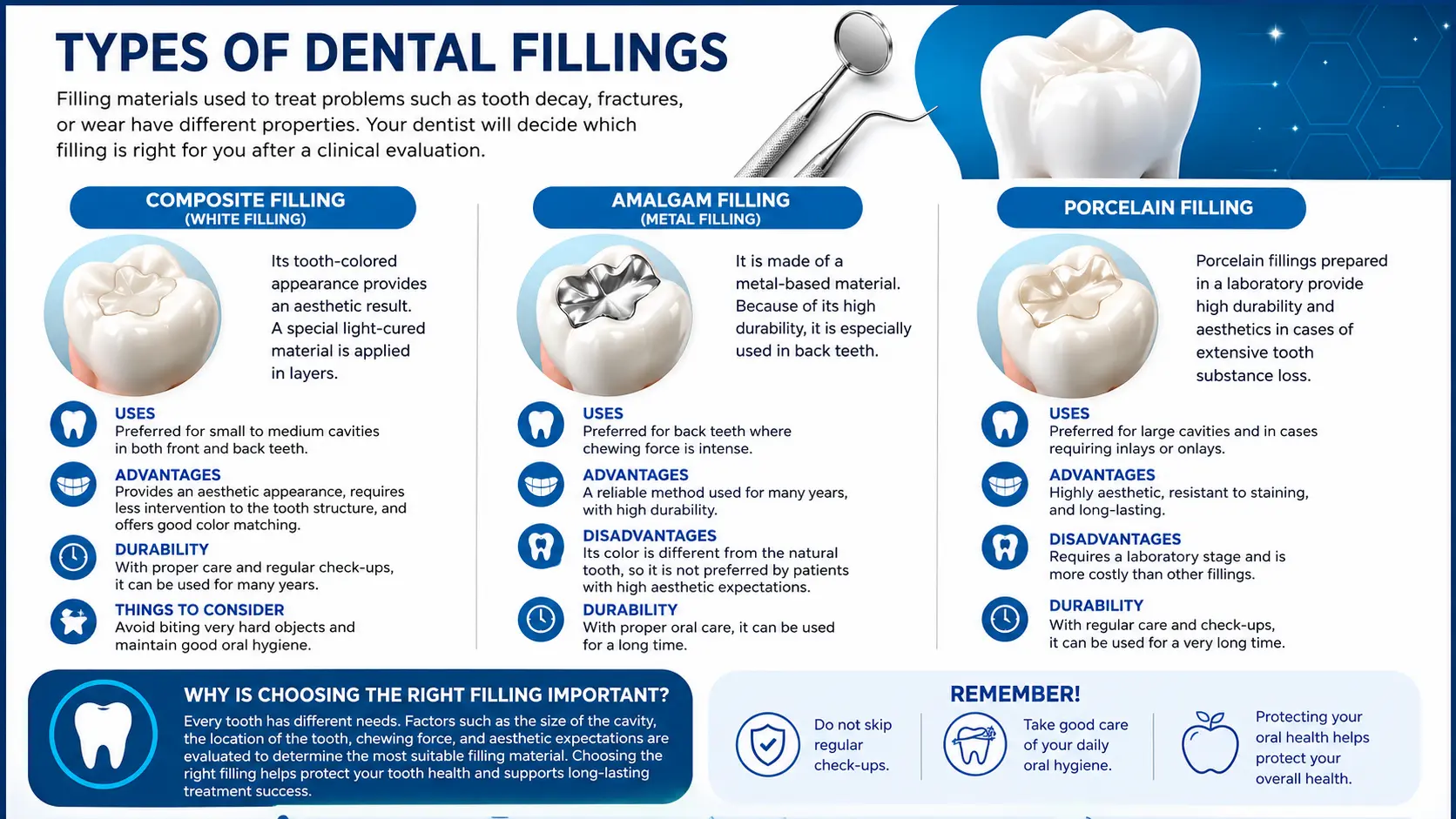
Tooth tissue loss is not the same in every patient, so there is no single filling material that is ideal for every case. The most suitable option depends on the depth of the cavity, the position of the tooth, chewing pressure, aesthetic needs and the amount of healthy tooth structure remaining. The main purpose of choosing the correct filling material is not only to restore the lost area, but also to protect the tooth’s long-term strength and function.
Composite Fillings
Composite fillings are one of the most commonly used filling materials because they can closely match the natural colour of the teeth. They are often known as white fillings or tooth-coloured fillings. Composite fillings are especially preferred for front teeth, visible areas of the smile and patients who have high aesthetic expectations. During the procedure, the material is placed in layers and hardened with a special dental curing light. Composite fillings can be used after decay removal, for small fractures and in selected aesthetic corrections. They are also useful in cases where preserving healthy tooth structure is important. However, composite may not always be the best choice for very large restorations or areas exposed to heavy chewing forces. In such situations, the dentist may recommend a stronger or laboratory-made alternative.
Amalgam Fillings
Amalgam fillings are metal-based restorations that have been used in dentistry for many years. They are known for their durability and were traditionally used in back teeth where chewing pressure is high. Because amalgam does not match the natural colour of the teeth, it is used less frequently today in areas where aesthetics are important. Many patients now prefer more natural-looking alternatives. However, material selection should not be based only on appearance. The position of the tooth, the shape of the cavity, moisture control, chewing force and the dentist’s clinical judgement all play a role in deciding the most suitable restoration.
Porcelain Fillings
Porcelain fillings, often referred to as inlays or onlays, are laboratory-made restorations used when the tooth has lost more structure than can be reliably restored with a standard filling, but does not necessarily require a full crown. This option may be recommended when a large amount of tooth tissue has been lost after decay removal or when the chewing surface needs stronger support. Porcelain restorations can provide excellent aesthetics, strength and long-term stability when planned correctly. Porcelain fillings are not necessary for every small cavity. They are considered when the remaining tooth structure and bite forces require a more durable and precisely fitted restoration. A good filling choice is not only about aesthetics. It must also protect the tooth, distribute chewing forces properly and support long-term oral health.
When Is a Dental Filling Needed?
A dental filling is most often needed when decay has caused loss of tooth structure. However, fillings can also be used in cases of fractures, cracks, wear, old filling failure or structural gaps that cause food trapping. The main goal is to clean the damaged area and restore the tooth’s natural function as conservatively as possible.
Many patients first notice symptoms such as mild sensitivity, food getting stuck, a rough surface or a small dark area on the tooth. Even if these signs seem minor, the underlying tissue loss may progress over time. Early diagnosis allows the tooth to be treated before a larger restoration becomes necessary. The decision to place a filling is not based only on what is visible to the eye. The dentist evaluates the depth of decay, proximity to the nerve, gum condition, symptoms and the chewing load placed on the tooth.
When Tooth Decay Is Present
Tooth decay is the most common reason for a dental filling. Decay begins on the tooth surface and can gradually progress into deeper layers. If it is treated while limited to the enamel or dentine, the damaged tissue can be removed and the tooth can be restored with a suitable filling material. Early treatment is important for preserving the vitality of the tooth. If the decay progresses too deeply, a filling alone may not be enough and root canal treatment may be required. A cavity does not always cause pain in the early stages. For this reason, routine dental examinations are important even when there are no symptoms.
In Cases of Fractures, Cracks and Wear
Dental fillings may also be used for small fractures, cracks or areas of tooth wear. Biting hard foods, grinding the teeth, clenching, nail biting or habits such as chewing pens can gradually damage the tooth surface. In limited fracture cases, composite fillings may restore both appearance and function. This is especially useful for small chipped areas in the front teeth. Tooth wear can also occur due to aggressive brushing, acidic foods and drinks, tooth grinding or incorrect brushing technique. These areas may become sensitive over time. When clinically appropriate, a filling can protect the exposed surface and reduce sensitivity.
When Old Fillings Need Replacement
Old fillings can wear down, crack, leak at the margins or develop decay underneath. Not every old filling needs to be replaced, but if there is leakage, fracture, staining, food trapping or recurrent decay, the restoration should be assessed. In some patients, older metal fillings may be replaced with more aesthetic materials if the tooth structure is suitable. However, the decision should not be based only on appearance. The remaining tooth tissue, bite pressure and long-term durability must also be considered.
When a Filling Is Not Enough
Not every damaged tooth can be restored with a simple filling. If decay has reached the nerve, root canal treatment may be necessary. If the tooth is severely broken or the fracture extends below the gum line, more advanced restorative treatment may be required. In cases where the tooth cannot be saved, extraction may be considered as a last option. The missing tooth can then be replaced with an implant, bridge or another prosthetic solution when appropriate.
A dental filling provides the best result when it is used in the right case, at the right time and with the correct material.
How Is a Dental Filling Performed?
Dental filling treatment begins with a detailed examination. The dentist evaluates the extent of the damage and may use X-rays when needed to understand the depth of the problem.
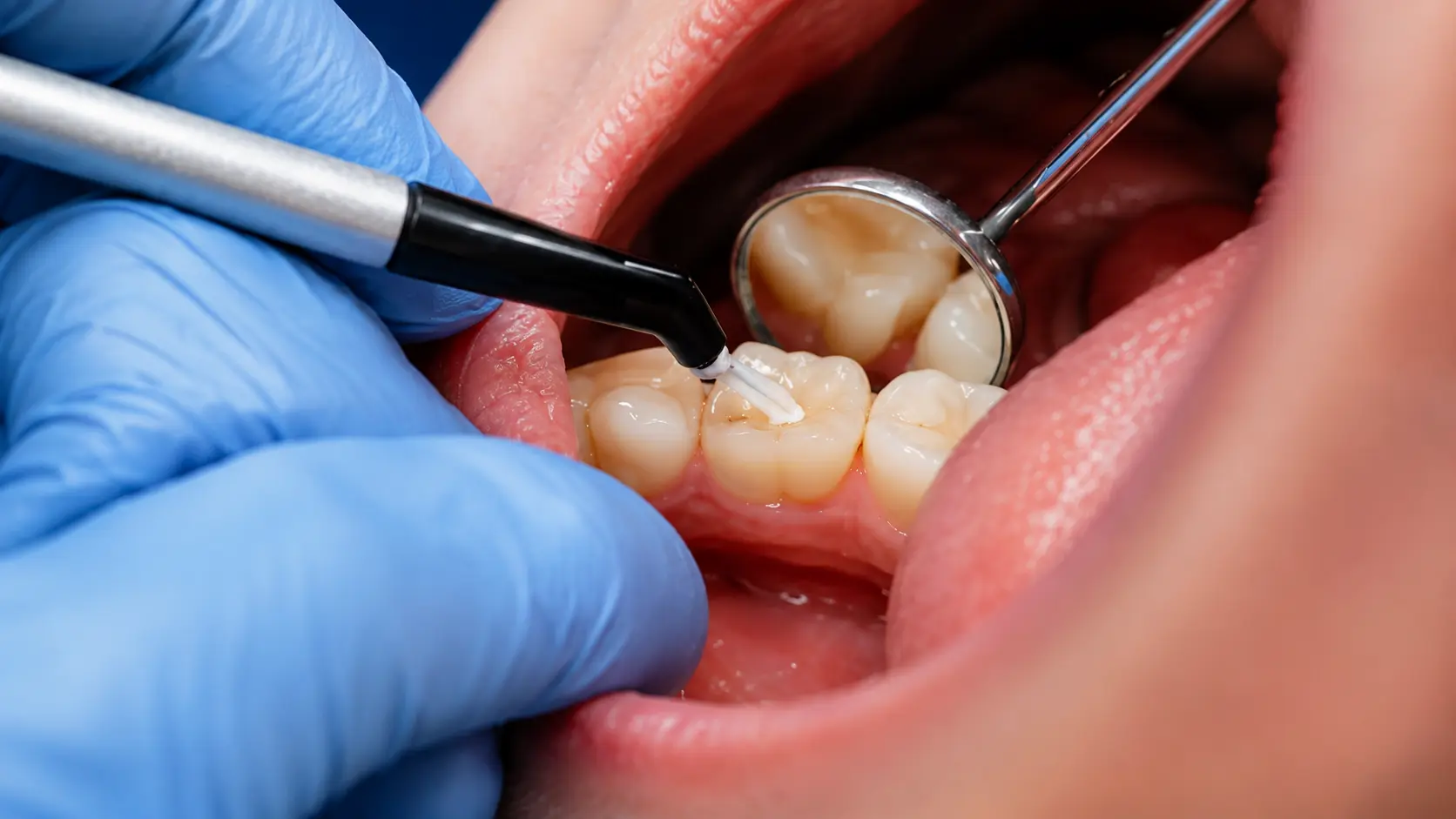
If decay is present, the softened and infected tooth tissue is carefully removed. In cases of small fractures or wear, the margins of the damaged area are prepared. The aim is to remove only the affected tissue while preserving as much healthy tooth structure as possible. Once the tooth is prepared, the selected filling material is placed into the cavity. With composite fillings, the material is usually applied in layers and hardened using a special curing light. This allows the dentist to shape the restoration carefully and achieve a better fit.
After placement, the bite is checked to make sure the filling does not sit too high or interfere with chewing. The surface is then shaped and polished for comfort, function and hygiene. Sometimes a tooth that appears simple at first may reveal deeper decay once cleaning begins. In such cases, the treatment plan may be adjusted during the appointment. If the decay is close to the nerve, protective materials may be used to support the tooth. If the nerve is already affected, root canal treatment may be discussed. Although a filling may seem like a routine procedure, each tooth must be assessed and treated individually.
How Long Does a Dental Filling Take?
The duration of a dental filling depends on the size of the cavity, the number of surfaces involved, the material used and the complexity of the case. A small, single-surface filling may be completed relatively quickly. Larger fillings, replacement of old restorations, aesthetic shaping or restorations involving multiple surfaces may take longer. Many fillings can be completed in a single appointment. However, larger restorations or porcelain inlays and onlays may require laboratory stages and more than one visit. The quality of the treatment is more important than speed. A well-isolated, carefully shaped and properly polished filling is more likely to provide long-term comfort and function.
Does a Dental Filling Hurt?
Pain during a dental filling depends on the depth of the cavity and the sensitivity of the tooth. Small and superficial procedures may sometimes be performed without anaesthesia. However, when decay is deeper or the patient is sensitive, local anaesthesia is used to keep the procedure comfortable. During treatment, patients may feel pressure, vibration or contact, but sharp pain is not expected when the area is properly anaesthetised. After the procedure, mild sensitivity can occur, especially if the cavity was deep or the tooth is adjusting to the new restoration. Short-term sensitivity to hot, cold or biting pressure may be normal. However, pain that increases, wakes the patient at night or continues for a long time should be assessed by the dentist. Sometimes sensitivity after a filling is caused by a high bite point. If the filling contacts the opposing tooth too early, a small adjustment may solve the problem.
Benefits of Dental Fillings
Dental fillings provide several important benefits when performed at the right time and in the right clinical situation.
Preservation of Natural Tooth Structure
One of the main benefits of a filling is that it helps preserve the natural tooth. By treating a cavity or small fracture early, further tissue loss and more complex treatment can often be avoided.
Improved Chewing Function
A tooth damaged by decay or fracture may cause discomfort during chewing. A properly shaped filling restores the contact surface and helps the tooth function more comfortably.
Reduced Tooth Sensitivity
Loss of enamel or dentine can cause sensitivity to hot, cold or sweet foods. By sealing and protecting the exposed area, a filling may help reduce sensitivity.
Improved Aesthetic Appearance
Decay, stained old fillings and small fractures in the front teeth can affect the appearance of the smile. Tooth-coloured fillings can restore a more natural and harmonious look when clinically suitable.
Prevention of Further Decay Progression
After decay is removed, the cleaned area must be sealed with an appropriate material. This helps prevent bacterial progression and protects the tooth from further damage.
How Long Do Dental Fillings Last?
The lifespan of a dental filling depends on the material used, the size of the restoration, oral hygiene, chewing habits, bite forces and whether the patient grinds or clenches their teeth. There is no single fixed lifespan for every filling. In patients with good oral hygiene, regular check-ups and balanced chewing forces, fillings can remain functional for many years. Over time, fillings may wear, stain, crack or develop leakage at the margins. For this reason, regular dental examinations are important even if there is no pain. A filling should not be judged only by whether it hurts. Many problems can begin silently and be detected early during routine check-ups.
Aftercare Following a Dental Filling
After a filling, it is important to follow the dentist’s instructions. If local anaesthesia has been used, patients should avoid biting the lips, cheeks or tongue until the numbness has worn off. During the first hours, it is sensible to be cautious with very hard, sticky, very hot or very cold foods. Mild sensitivity can be normal for a short period. If the filling feels high, the bite feels uneven, or pain increases instead of improving, the dentist should be contacted. A small bite adjustment may be needed.
Good oral hygiene is essential after treatment. Brushing, flossing and routine dental visits help protect both the filling and the surrounding natural tooth structure. In our clinic, dental filling treatment is planned with a patient-centred and conservative approach. The aim is to avoid unnecessary procedures, preserve natural tooth tissue whenever possible and provide restorations that support long-term comfort, function and aesthetics.
Dental Filling Prices in 2026
The cost of a dental filling can vary depending on the size of the cavity, the number of tooth surfaces involved, the material used, the location of the tooth and whether additional treatment is required. A small composite filling and a larger porcelain inlay or onlay are not the same type of treatment, so they should not be evaluated under a single fixed price. For this reason, an accurate fee can only be provided after a dental examination and clinical assessment.
Frequently Asked Questions
Does a dental filling hurt?
Most dental fillings can be completed comfortably. Local anaesthesia is used when needed, especially for deeper cavities. Mild sensitivity may occur afterwards but is usually temporary.
Can a filled tooth decay again?
Yes. A filled tooth can develop decay again, especially around the margins of the filling if oral hygiene is poor, if there is leakage or if regular dental check-ups are neglected.
Can white fillings provide an aesthetic result?
Yes. Composite white fillings can provide a natural appearance in suitable cases. However, the best material should be selected after clinical evaluation.
How do I know whether I need a filling or root canal treatment?
This depends on the depth of decay, symptoms, examination findings and X-rays. Mild or moderate tissue loss may be treated with a filling, while decay that has reached the nerve may require root canal treatment.
Is sensitivity after a filling normal?
Mild and short-term sensitivity can be normal after a filling, especially if the cavity was deep. However, increasing pain, prolonged sensitivity or pain that wakes you at night should be assessed by your dentist.